 listicle
7 Signs Your Driveway Needs Professional Cleaning
Table of Contents
- Introduction: Why Your Driveway's Condition Matters
- 1. Stubborn Oil and Grease Stains That Won't Budge
- 2. Moss, Algae, and Lichen Growth on Your Driveway
- 3. Visible Cracks and Crumbling Edges
- 4. Pooling or Standing Water After Rain
- 5. Faded or Discolored Surface and Tire Marks
- 6. Weed Growth in Joints and Cracks
- 7. Unpleasant Odors from Organic Matter
- DIY vs. Professional Driveway Cleaning: What Actually Differs
- The Cost of Neglect: Why Waiting Costs More
- Seasonal Maintenance Checklist
- When to Call a Professional
- Frequently Asked Questions
Last Updated: September 23, 2026
Introduction: Why Your Driveway's Condition Matters
A driveway is the first thing visitors, buyers, and customers notice, yet it's often the last surface anyone maintains, which is why the signs your driveway needs professional cleaning are easy to miss. Learning to recognize the signs your driveway needs professional cleaning early can save you from a much larger repair bill. At Steve's Premium Pressure Washing, we've spent over a decade watching small stains and hairline cracks turn into crumbling slabs.
1. Stubborn Oil and Grease Stains That Won't Budge
Oil and grease stains that survive normal washing are the clearest early signal that a driveway needs professional attention. Motor oil, transmission fluid, and cooking grease soak into the pores of concrete and asphalt, where a garden hose can't reach. Scrubbing harder with dish soap pushes the oil deeper and spreads the stain. Professional degreasing uses chemical treatment and controlled heat to lift oil from below the surface.
2. Moss, Algae, and Lichen Growth on Your Driveway
Green and black growth along the edges of a driveway means moisture is staying where it shouldn't. Concrete and pavers are porous, and once algae or mildew takes hold, it holds water against the surface and accelerates breakdown. This is more than cosmetic: organic growth makes surfaces slick when wet and slowly eats away at the material underneath.
Moss, Algae, and Lichen Are Not the Same Problem
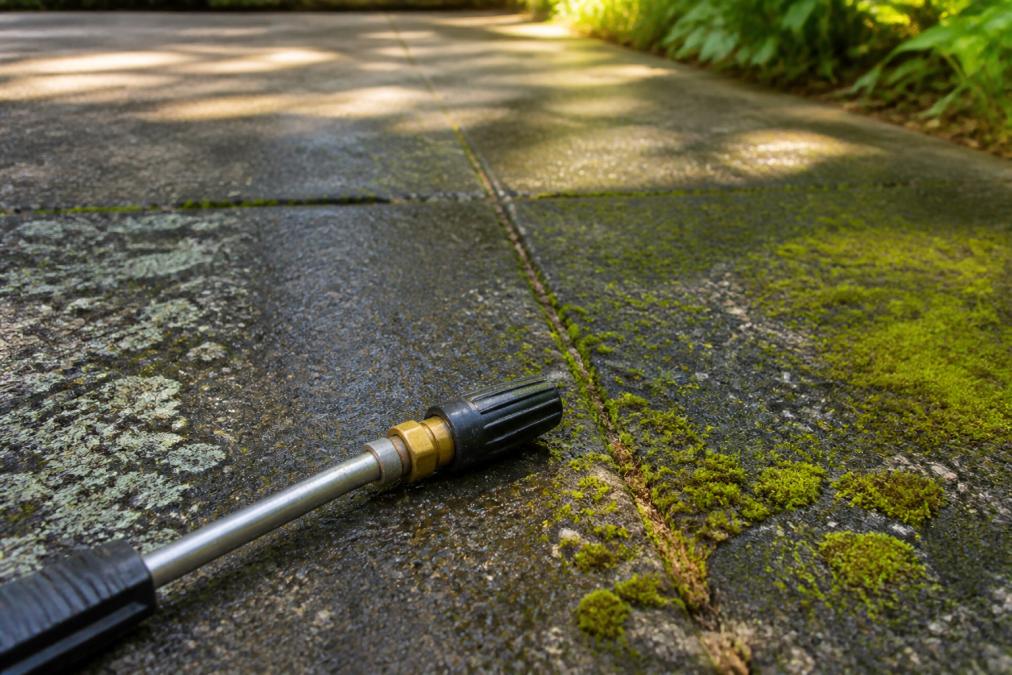
Most homeowners lump these three together, but they behave differently and need different treatments:
- Algae shows up first as a thin green or black film, usually on the shaded side or wherever water lingers. It spreads fast in humid weather and is the easiest to kill.
- Moss is a shallow-rooted plant that grows in joints, along edges, and in the thin film of soil on a neglected surface. It holds moisture directly against the concrete or pavers, so the damage underneath is often worse than the moss looks.
- Lichen is the toughest of the three. It's a composite organism, a fungus paired with an alga, that anchors into the surface with root-like structures. On concrete and pavers, lichen can etch a permanent outline even after the growth is dead, so early treatment matters most here.
Why Organic Growth Is More Than an Eyesore
Organic growth is a maintenance problem disguised as a cosmetic one. Moss and lichen trap moisture against concrete and pavers, and that constant dampness weakens the surface. In humid climates, growth returns within weeks if the moisture problem isn't addressed.
What Changes by Surface Material
The right approach depends on the surface:
- Concrete: Porous and alkaline, so it holds moisture and supports algae. Soft washing with a diluted sodium hypochlorite solution is standard; high pressure etches the cream layer and leaves a permanently dull finish.
- Asphalt: The binder is petroleum-based and softens in heat, so aggressive pressure or harsh solvents can strip it. Algae and moss here usually signal a drainage or shade problem to fix alongside the cleaning.
- Pavers: The joints are the real problem. Sand joints hold moisture and organic matter, so cleaning must address the joint, not just the paver face. Re-sanding afterward is often part of the job.
Why It Comes Back
If growth returns within weeks of a cleaning, the cause is almost always one of three things: the roots weren't killed, the surface stayed damp from poor drainage or shade, or the cleaning stripped the sealant and left the material more porous. Fixing the moisture source, clearing joints, correcting the slope, trimming shade, is what makes a cleaning last more than a season.
3. Visible Cracks and Crumbling Edges
Cracks wider than a credit card, or edges that crumble when touched, point to surface integrity that's already failing. Water gets into those gaps, expands in heat, and widens the crack with every cycle. Once the sub-base softens, patching the visible crack won't fix it. Cleaning and sealing at this stage is far cheaper than resurfacing or replacing the slab later.
4. Pooling or Standing Water After Rain
Water that lingers more than a day after rain signals a drainage problem, not just a dirty surface. Standing water is the biggest driver of long-term driveway damage because it keeps the surface saturated and feeds organic growth. It often points to clogged joints, a settled sub-base, or a shifted slope. Professional cleaning clears the debris blocking drainage, and an inspection tells you whether the issue is surface-level or structural.
5. Faded or Discolored Surface and Tire Marks
A driveway that looks washed-out or shows dark rubber scuffs is usually suffering from more than dirt. UV exposure breaks down asphalt and concrete over years, and tire marks embed rubber into the pores. A deep clean often restores much of the original color, and a fresh coat of sealant slows fading going forward. If the surface still looks chalky after cleaning, the material itself is aging.
Fading and Tire Marks Are Two Different Problems
It helps to separate them, because the fix and timeline differ:
- Fading is a chemical change. On asphalt, UV light breaks down the bitumen binder holding the aggregate together, turning the surface from black to gray as it oxidizes. On concrete, UV exposure plus traffic wear dulls the surface and exposes the aggregate. Fading is gradual and won't come back with cleaning alone once the binder is gone.
- Tire marks are a deposit, not a change to the material. Hot tires pick up asphalt binder and rubber and transfer it into the pores. On concrete, the marks are usually rubber transfer; on asphalt, often a mix of rubber and softened binder. A deep clean with the right degreaser lifts most of it, but marks that sat through a summer can stain permanently.
What Actually Restores Color
A deep clean removes the surface layer of dirt, oxidized binder, and embedded rubber, and on many driveways that alone brings back most of the original color. What it can't do is replace binder UV has already broken down. That's what sealant is for.
Timing Matters More Than Product
The biggest factor in how long a sealant lasts is when it's applied. Sealing over a damp or dirty surface traps moisture underneath and shortens the sealant's life, sometimes to a single season. The surface must be clean, fully dry, and applied during dry weather with moderate temperatures. On asphalt, seal coating is typically done when the surface is at least six months old and the weather is consistently above 50°F, with no rain forecast for 24 to 48 hours after application.
How the Fix Differs by Material
- Asphalt: Fading is expected; the question is how fast. A seal coat every few years restores color and protects the binder. Tire marks usually lift with a degreaser, but if the binder underneath is soft, the mark may mean the surface needs resealing, not just cleaning.
- Concrete: Fading is slower and often just surface dirt and oxidation. A deep clean plus a penetrating sealer is usually enough. Chalky residue that won't rinse off means the surface is aging and may need more than cleaning.
- Pavers: Color fading is often the sealer wearing off, not the paver itself. Re-sealing with a paver-specific sealer restores color and locks joint sand in place. Tire marks usually come out with a targeted degreaser and don't need a full re-seal.
6. Weed Growth in Joints and Cracks
Weeds pushing up through joints and cracks signal two problems at once: trapped moisture and a failing seal. Pulling them by hand removes the plant but leaves the root system and open gap behind. Lasting weed mitigation means cleaning out the joint, killing the root, and refilling or sealing the gap. Left alone, those gaps let water into the sub-base and speed up structural damage.
7. Unpleasant Odors from Organic Matter
A musty or sour smell near the driveway usually means organic matter is decomposing somewhere it shouldn't. Leaves, pollen, and algae collect in low spots and joints, breaking down fast in humid weather. The odor is a signal, not the problem. Deep cleaning removes the buildup, and treating the surface afterward keeps the smell from returning within weeks.
DIY vs. Professional Driveway Cleaning: What Actually Differs
DIY cleaning works for light surface dust but falls short on the problems above. A rented pressure washer and high-pressure nozzle can strip sealant, etch concrete, and drive water into cracks rather than remove it. Professional methods pair the right pressure with the right chemical treatment for each surface, which matters most on pavers, aggregate finishes, and older concrete.
| Sign | What It Signals | DIY Fix | Professional Fix |
|---|---|---|---|
| Oil and grease stains | Deep-set contamination | Surface scrub only | Degreasing and heat treatment |
| Moss, algae, lichen | Trapped moisture | Temporary removal | Soft wash and root kill |
| Cracks and crumbling | Failing surface integrity | Cosmetic patch | Cleaning, sealing, repair |
| Standing water | Drainage or sub-base issue | Sweep debris | Drainage clearing and inspection |
| Fading and tire marks | Oxidation and embedded rubber | Light rinse | Deep clean and sealant |
| Weeds in joints | Open gaps and moisture | Hand pulling | Joint cleaning and refill |
| Odors | Decomposing organic matter | Raking and rinsing | Deep clean and treatment |
The Cost of Neglect: Why Waiting Costs More
Ignoring these signs rarely saves money; it shifts the cost from cleaning to repair. A driveway that only needs cleaning and sealing today can need resurfacing or full replacement within a few years if water keeps getting into the sub-base. The Federal Highway Administration's pavement preservation guidance makes the same point about roads: preventative maintenance costs far less than reconstruction.
Seasonal Maintenance Checklist
A short seasonal routine catches most of these problems before they start. Here's the schedule we recommend for humid climates:
- Spring: Inspect for winter damage, clear debris from joints, and check drainage after heavy rain
- Summer: Watch for algae and mildew growth, and clean up pollen and leaf buildup
- Fall: Remove fallen leaves promptly so they don't stain or trap moisture
- Winter: Recheck cracks before the next wet season, and reseal if the surface looks chalky
- Year-round: Treat new oil spots within a week, before they set
When to Call a Professional
If you're seeing three or more of the signs above, or any sign involving standing water or crumbling edges, it's time for a professional assessment. Steve's Premium Pressure Washing has cleaned and restored driveways, patios, and building exteriors for over 10 years, and we're a woman-owned, family-run business that shows up when we say we will.
Frequently Asked Questions
How often should you have your driveway professionally cleaned?
Most driveways benefit from professional cleaning every 12 to 18 months. In humid climates with heavy organic growth, twice a year may be needed. Regular cleaning prevents stains from setting and stops weeds from widening cracks. A consistent maintenance schedule also makes each cleaning faster and less expensive over time.
Can professional cleaning prevent driveway damage?
Yes. Professional cleaning removes abrasive dirt, organic growth, and stains that break down surfaces. It also clears drainage channels and joints, preventing water pooling that leads to cracks and potholes. Addressing these issues early avoids costly resurfacing or structural repairs later. Preventative maintenance is far cheaper than restoration.
What is the difference between pressure washing and soft washing a driveway?
Pressure washing uses high-pressure water to blast away grime, best for concrete. Soft washing uses low pressure with specialized cleaning solutions to safely treat organic growth like mildew and algae. Soft washing is ideal for delicate surfaces such as pavers or painted areas, while pressure washing suits tough concrete. The right method depends on your driveway material.
How much does an average driveway cost to clean?
The cost of professional driveway pressure washing depends on the size, material, and level of soiling. For an accurate quote tailored to your property, contact a local professional. Pricing may also vary by any additional services like sealing or stain removal.
Driveway damage rarely announces itself; it shows up as a stain you can't scrub out, a crack you keep meaning to fix, or water that never quite drains. Steve's Premium Pressure Washing can identify what's actually causing the problem and restore your driveway's curb appeal with soft wash technology, upfront pricing, and flexible scheduling. Get your free estimate today and stop guessing whether that stain is cosmetic or the start of something expensive.