 blog
blog
Commercial Building Exterior Pressure Wash Guide
Table of Contents
- Why Commercial Building Exterior Pressure Wash Matters for Property Value
- Commercial Pressure Washing Cost Per Square Foot: What Drives Pricing
- Benefits of Exterior Building Maintenance Contracts for Property Managers
- Commercial Building Exterior Cleaning Best Practices
- Environmental Compliance and Water Reclamation Requirements
- Insurance and Liability: What to Verify Before Hiring a Contractor
- How Often Should You Schedule a Commercial Building Exterior Pressure Wash?
- Frequently Asked Questions
Last Updated: September 11, 2026
Why Commercial Building Exterior Pressure Wash Matters for Property Value
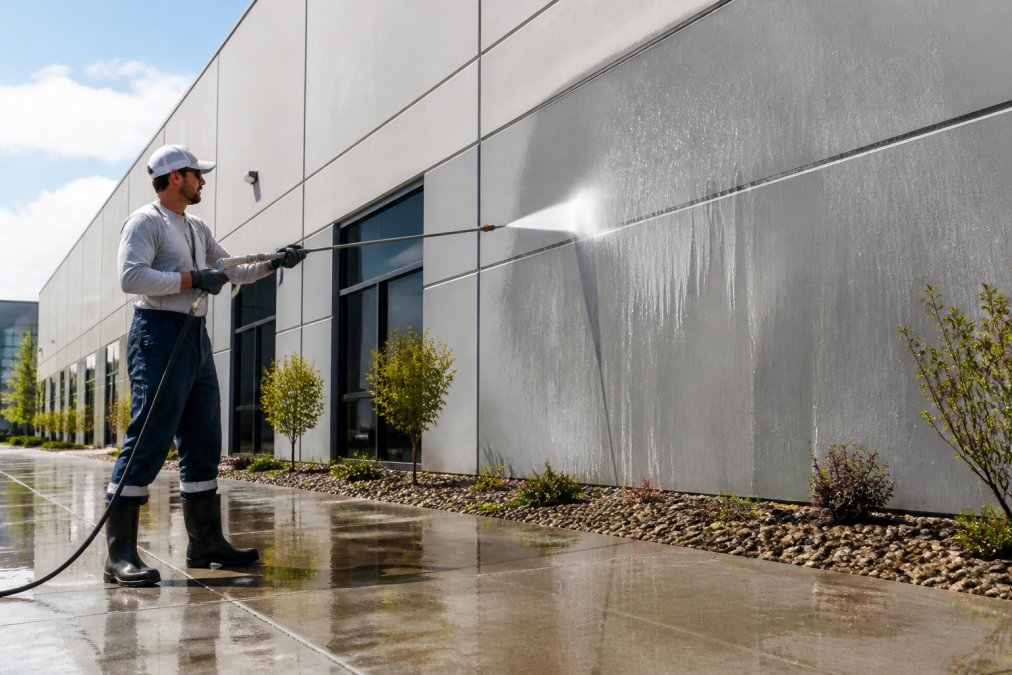
A commercial building exterior pressure wash is a scheduled cleaning process that removes mold, mildew, grime, oil, and pollutants from a property's outside surfaces using controlled water pressure and appropriate cleaning agents. For property managers, it protects both curb appeal and the building envelope itself.
Organic growth holds moisture against siding and masonry. That trapped moisture accelerates cracking, spalling, and premature surface failure.
Clean exteriors also signal a well-run property to tenants and customers. The EPA's guidance on mold and moisture control confirms that managing moisture early prevents costly structural damage down the line.
Commercial Pressure Washing Cost Per Square Foot: What Drives Pricing
Commercial pressure washing cost per square foot depends on surface type, contamination level, building height, access requirements, and, increasingly, the water reclamation obligations that apply to your site. Most contractors quote per square foot rather than flat rates, so understanding how each variable compounds helps you compare bids on equal footing instead of chasing the lowest number.
The Variables That Actually Move the Number
Here's what drives a quote, roughly in order of impact:
- Surface material: Porous brick, stucco, and unsealed concrete absorb more water and chemical than metal panels or sealed concrete, so they take longer per square foot and consume more detergent.
- Contamination severity: Light atmospheric grime is a single pass. Heavy mold, graffiti, rust staining, or years of baked-on oil require pre-treatment, dwell time, and multiple passes, often two to three times the labor.
- Building height and access: Anything above the first story typically requires a lift, boom, or rope access. Each piece of equipment adds mobilization cost, and occupied storefronts, fenced lots, and tight loading docks slow crews further.
- Water and chemical costs: Biodegradable detergents, soft-wash surfactants, and reclamation equipment add to the base rate. On sites where runoff must be captured, the containment and disposal step is a real line item, not a rounding error.
- Scheduling and phasing: Work performed outside business hours, in phases, or around tenant operations carries a premium because crews can't work at full speed.
Why Two Bids for the Same Building Can Differ by Thousands
A common pattern is that the low bid and the high bid aren't pricing the same scope. The low bid may assume a single pass, skip surface prep, dilute chemicals below effective concentration, or use pressure high enough to damage the surface you're trying to protect. The high bid may include reclamation, pollution liability coverage, and a documented pre- and post-inspection.
When you compare quotes, ask each contractor to itemize:
- Square footage by surface type
- Method (soft wash vs. pressure wash) per surface
- Number of passes and any pre-treatment
- Reclamation and disposal approach
- Insurance certificates and coverage limits
- Scheduling window and any after-hours premium
A quote that can't answer those six items isn't a quote, it's a guess.
How Reclamation and Compliance Show Up in the Price
Where local stormwater rules require capture of wash water, the contractor has to deploy berms, mats, or vacuum recovery, then filter and dispose of the collected water per local rules. That equipment and disposal cost is real, and it's the line item cheapest bids tend to omit. If a bid is dramatically lower than the others and doesn't mention runoff handling, ask directly how they plan to keep wash water out of the storm drain. The answer tells you whether you're comparing apples to apples.
A Practical Way to Budget
For planning purposes, facility managers typically build an annual exterior cleaning line item by multiplying the cleanable square footage by a per-square-foot rate, then adding a contingency for spot treatments and any reclamation surcharge. Because rates vary by region, surface mix, and access, the most reliable number is the one a contractor gives you after walking the property. Use the first year's invoice as the baseline for the next budget cycle, and revisit it if you add a building, change tenant mix, or take on a site with heavier runoff obligations.
Benefits of Exterior Building Maintenance Contracts for Property Managers
The benefits of exterior building maintenance contracts come down to predictability: fixed schedules, consistent results, and fewer emergencies. A recurring agreement turns exterior cleaning from a reactive expense into a planned line item.
For facility management teams juggling multiple properties, contracts solve three recurring headaches:
- Budget forecasting: Known costs replace surprise invoices
- Vendor reliability: Scheduled crews show up on a cadence, not when they feel like it
- Documentation: Service records support warranty claims and inspections
The OSHA standards for workplace safety also matter here. Reputable contractors document their safety protocols, and that documentation protects you if an incident occurs on your property.
We build these schedules around your tenant mix, peak business hours, and seasonal demands, so cleaning never disrupts operations.
Commercial Building Exterior Cleaning Best Practices
Effective commercial building exterior cleaning starts with matching the method to the surface, then building a seasonal rhythm around it. Pressure alone is never the answer.
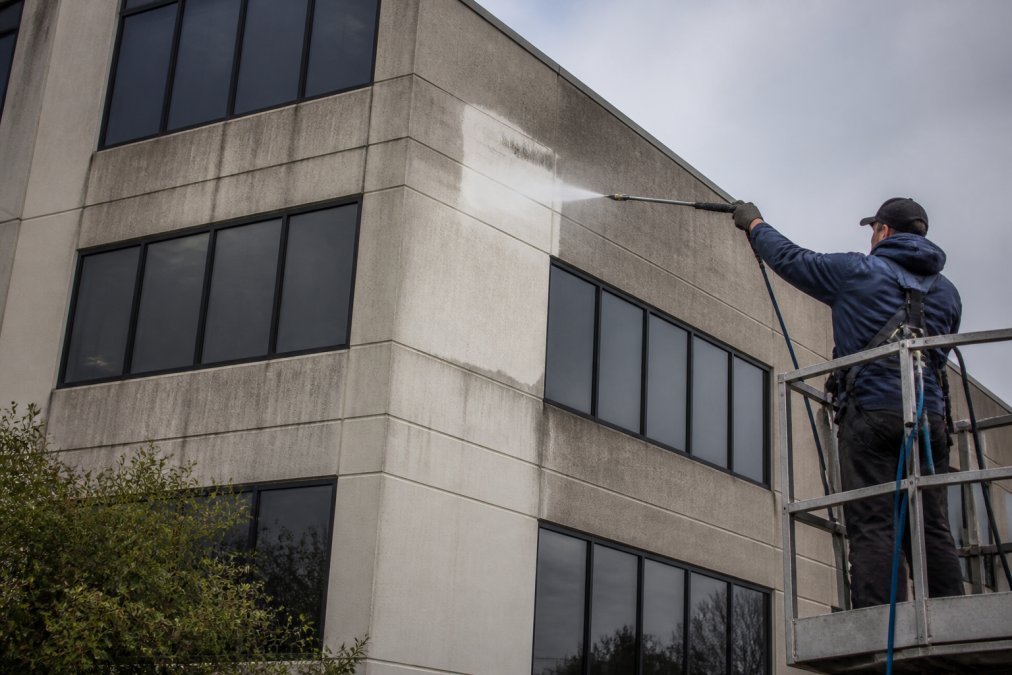
Soft Washing vs. Pressure Washing: Matching the Method to the Surface
Soft washing uses low pressure combined with specialized cleaning solutions to kill organic growth at the root. Pressure washing relies on high force to blast contaminants away. Choosing wrong means either a weak result or a damaged surface.
Here's the practical breakdown:
| Surface | Recommended Method | Why |
|---|---|---|
| Painted wood siding | Soft wash | High pressure strips paint and splinters wood |
| Brick and masonry | Soft wash | Preserves mortar and prevents spalling |
| Concrete sidewalks | Pressure wash | Withstands higher force without damage |
| Metal panels | Low-pressure wash | Prevents seal and coating damage |
| Parking lots | Pressure wash | Removes oil and tire marks effectively |
The CDC's guidance on mold cleanup notes that killing mold requires treating the source, not just blasting the visible growth. Soft washing does exactly that.
Seasonal Maintenance Checklists for Commercial Properties
A seasonal checklist keeps exterior maintenance from falling through the cracks. Spring and fall are the workhorses; summer and winter handle spot issues.
- Spring: Full pressure wash of walkways, parking lots, and building facade after pollen season
- Summer: Spot-treat mold, mildew, and bird droppings on high-traffic entrances
- Fall: Clear gutters, wash dumpster pads, remove leaf stains before winter
- Winter: Address salt and ice-melt residue on sidewalks and loading zones
Environmental Compliance and Water Reclamation Requirements
Water reclamation captures and treats runoff before it reaches storm drains. Many jurisdictions require it for commercial exterior cleaning, especially where wash water could carry chemicals, oil, or debris into waterways.
The EPA's stormwater program guidance outlines how runoff from commercial cleaning operations falls under clean water regulations. Contractors who ignore this expose property owners to fines.
What a compliant operation looks like:
- Containment: Berms or mats block runoff from reaching drains
- Collection: Vacuum systems recover wash water on site
- Treatment: Water is filtered and disposed of per local rules
- Documentation: Records prove compliance during inspections
Ask any contractor how they handle runoff before you hire. If they can't explain their reclamation process, walk away.
Insurance and Liability: What to Verify Before Hiring a Contractor
Before any crew touches your building, verify general liability insurance and workers' compensation coverage. Without both, an injury or property damage claim can land on your balance sheet, and on a commercial property, that exposure is far larger than on a residential job.
The Certificate of Insurance (COI): What to Request and Why
Ask for a Certificate of Insurance before work begins, and request it directly from the contractor's broker or insurer rather than accepting a PDF forwarded by the contractor. The COI is the one-page document that names the insured, the policy numbers, the effective dates, and the coverage limits. Confirm three things:
- The named insured matches the contractor you're hiring, not a related entity or an expired policy.
- The policy is current, check the effective and expiration dates against your project window.
- The limits are adequate for your property's value, a building with significant replacement cost needs coverage that reflects it.
Additional Insured and Waiver of Subrogation
Two endorsements are worth requesting on commercial work:
- Additional insured status: This adds your property management entity to the contractor's liability policy for the duration of the work, so you have direct recourse if a claim arises.
- Waiver of subrogation: This prevents the contractor's insurer from pursuing your insurance after paying a claim, which keeps a single incident from touching two policies.
Both are standard requests on commercial contracts. A contractor who routinely works with facility managers will already know how to provide them.
Workers' Compensation and the Injury Exposure
Workers' compensation coverage protects you if a crew member is injured on your property. Without it, an injured worker may look to the property owner for recovery. Verify the coverage is in force and that the classification matches the work being performed, exterior cleaning at height carries different risk than ground-level washing.
Pollution Liability: The Coverage Most Owners Forget
If the contractor uses chemical cleaning agents, and most soft-wash and detergent-based methods do, confirm they carry pollution liability coverage. Standard general liability policies frequently exclude claims arising from chemical runoff, overspray, or disposal. On a site where wash water must be captured and disposed of per local rules, that exclusion is the gap that turns a small spill into a large claim.
A Simple Pre-Hire Checklist
- COI requested directly from the broker or insurer
- Named insured matches the hiring entity
- General liability limits adequate for property value
- Workers' compensation in force with correct classification
- Additional insured endorsement for your management entity
- Waiver of subrogation on file
- Pollution liability confirmed if chemical agents are used
- Reclamation and disposal plan documented in the contract
Why This Protects Your Budget, Not Just Your Building
A single uninsured incident, a damaged facade, a chemical stain on a tenant's vehicle, or a worker injury, can cost far more than the cleaning contract itself. Verifying coverage takes minutes and shifts that risk to the party equipped to carry it. For facility managers overseeing multiple properties, a standardized COI review process is one of the highest-return administrative habits you can build.
How Often Should You Schedule a Commercial Building Exterior Pressure Wash?
Most commercial properties need a full exterior pressure wash once or twice a year, with spot treatments as needed. High-traffic retail and food-service buildings often need quarterly service.
Climate drives the schedule more than any other factor. Humid regions breed mold and mildew fast, so facades there need more frequent attention than dry climates. Parking lots and dumpster pads accumulate oil and organic waste year-round and typically need monthly or quarterly cleaning.
Every commercial property owner eventually faces the same problem: exterior grime that undermines the building's value and invites bigger repair bills. Steve's Premium Pressure Washing handles that with soft wash technology that's safe for every surface, transparent upfront pricing with no hidden fees, and flexible scheduling available. With 10+ years of experience and a woman-owned, family-run team, we are committed to providing transparent, personalized service and a stress-free experience for every client. Get your estimate from Steve's Premium Pressure Washing and restore your property's curb appeal.
Frequently Asked Questions
How often should a commercial building be pressure washed?
Most commercial properties benefit from exterior cleaning every 12 to 18 months. High-traffic buildings, those near trees or highways, or properties in humid climates may need service every 6 to 12 months. Parking lots, dumpster pads, and sidewalks often require more frequent attention, sometimes quarterly. A maintenance contract with scheduled visits prevents buildup from becoming a restoration project.
Is pressure washing safe for all commercial building materials?
No single method works for every surface. High-pressure washing suits concrete, brick, and stone, while soft washing is safer for stucco, wood, painted siding, and roofing. Using the wrong pressure or technique can crack mortar, strip paint, or force water behind the building envelope. A qualified contractor assesses each exterior substrate and selects the appropriate method and cleaning agents.
How much does commercial building exterior pressure washing cost?
Pricing depends on building height, square footage, surface type, contaminant severity, and site access. Low-rise buildings with simple layouts cost less per square foot than high-rise exteriors requiring lifts or water-fed poles. Requesting an on-site estimate gives you an accurate figure. Steve's Premium Pressure Washing provides transparent, upfront pricing with no hidden fees.
Does regular exterior cleaning increase commercial property value?
Yes. Consistent exterior maintenance protects surface integrity, prevents mold and mildew remediation costs, and preserves curb appeal, which supports tenant retention and lease rates. Clean buildings also pass inspections more easily and avoid citations for graffiti, oil stains, or sidewalk sanitation violations. Treating exterior cleaning as preventative maintenance extends the life of the building envelope.