 blog
blog
Expert Driveway Stain Removal Services: 2026 Guide
Table of Contents
- Why Driveway Stains Get Worse Over Time
- Driveway Stain Identification Guide
- How to Remove Rust Stains from Concrete Driveway
- Best Driveway Oil Stain Remover Options
- The Cost of Professional Driveway Pressure Washing
- What Professional Driveway Stain Removal Services Do Differently
- DIY vs. Hiring Expert Driveway Stain Removal Services
- Frequently Asked Questions
Last Updated: September 24, 2026
Why Driveway Stains Get Worse Over Time
Driveway stains rarely stay the same size. A small oil drip from last winter spreads into a dark patch by summer, and what looked like a faint rust spot becomes a permanent orange scar. This guide from Steve's Premium Pressure Washing explains why that happens and how expert driveway stain removal services stop the damage before it sets.
Concrete looks solid, but it is actually porous. According to the Portland Cement Association's guide to concrete surfaces, concrete contains millions of tiny capillaries that allow moisture to move through the slab. Those same channels pull oil, rust, and organic matter deep into the surface.
Sun and heat make it worse. In warm climates, the surface expands during the day and contracts at night. That cycle opens the pores wider, letting stains sink deeper with every season.
How Porous Concrete Traps Stains
Concrete is a mix of cement, sand, aggregate, and water. When it cures, water evaporates and leaves behind a network of microscopic pores. Those pores are what make concrete grip stains so effectively.
Driveway Stain Identification Guide
Identifying the stain type is the first step in any successful removal plan. Oil, rust, algae, and tire marks each require a different approach, and using the wrong method can set the stain permanently or damage the concrete.
| Stain Type | Appearance | Best Removal Method |
|---|---|---|
| Oil and grease | Dark, slick patches | Degreaser plus hot-water extraction |
| Rust | Orange or brown streaks | Chemical treatment and rust remover |
| Algae and mildew | Green or black film | Soft wash with chemical treatment |
| Tire marks | Black rubber scuffs | Surface cleaner with high-pressure rinsing |
Oil and Grease Stains
Oil stains appear as dark patches that spread outward from the source. Fresh oil sits on top of the concrete. Old oil has already soaked in and shows a dull, matte finish.
Rust, Algae, and Tire Marks
Rust stains usually come from fertilizer, metal furniture, or irrigation water containing iron. They look like orange streaks and spread with every rain.
How to Remove Rust Stains from Concrete Driveway
Rust removal works best when you treat the stain as a chemical problem, not a scrubbing problem. Household bleach and wire brushes can etch the concrete and make the discoloration worse.
Here is a step-by-step approach:
- Test the cleaner on a hidden area first
- Apply a commercial rust remover to the dry stain
- Let it sit for the time listed on the label
- Scrub lightly with a soft-bristle brush
- Rinse thoroughly with low-pressure water
- Repeat if the stain has been there for years
- Seal the area once it dries completely
Best Driveway Oil Stain Remover Options
The right oil stain remover depends on how long the stain has been there. Fresh spills respond to absorbent powders and liquid degreasers. Old, set-in stains need hot-water extraction or a commercial-grade product.
The Cost of Professional Driveway Pressure Washing
Most homeowners searching for driveway stain removal want one thing before they call: a realistic number. The honest answer is that pricing depends on the property, but a useful cost-benefit framework beats a vague "call for a quote" every time.
What Drives the Price Up or Down
Several factors determine the final quote:
- Driveway size: A standard two-car driveway runs roughly 400 to 600 square feet; longer or wider slabs push labor and water use higher
- Stain severity: Routine surface cleaning sits at the low end; set-in oil, rust, or tire marks require chemical treatment and dwell time, which adds labor
- Surface type: Poured concrete cleans faster than pavers, which need joint protection and often polymeric sand replacement afterward
- Access and slope: Fences, parked cars, and steep grades slow the work
- Frequency: Recurring maintenance visits typically cost less per visit than one-off emergency calls
The DIY Cost-Benefit Math Most Homeowners Skip
A pressure washer rental at a home improvement store typically runs in the range of $60 to $100 per day for a gas unit, before you buy detergent, degreaser, a surface cleaner attachment, and personal protective equipment. Add the value of your own weekend hours, the risk of etching the slab with an unfamiliar wand, and the likelihood that a set-in oil stain survives the first attempt, and the DIY "savings" shrink fast.
Why Sealing Changes the Long-Term Math
Stain removal is a one-time cost. Sealing is what converts that cost into an investment. A penetrating sealer applied after cleaning slows how quickly oil, rust, and organic matter soak back into the concrete, which stretches the interval between professional visits. Homeowners who skip sealing often pay for the same stain twice.
What Professional Driveway Stain Removal Services Do Differently
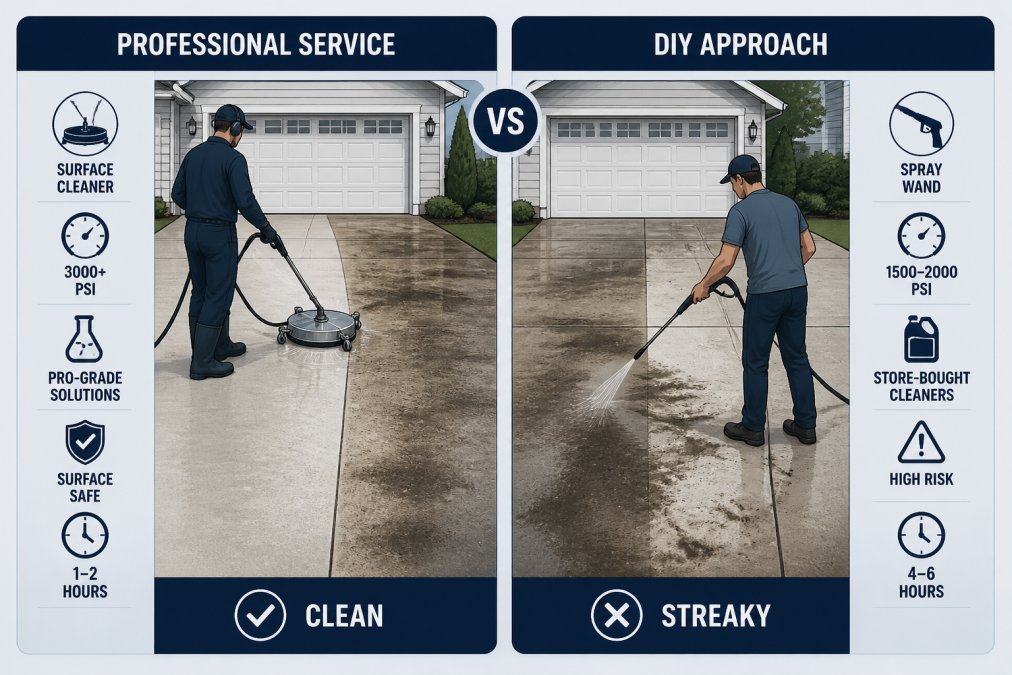
Professional driveway stain removal services use commercial-grade equipment, targeted chemical treatment, and surface-specific techniques that homeowners cannot replicate with a rental unit. The difference shows up in the results and in how long they last.
Concrete vs. Paver Cleaning Techniques
Concrete and pavers require completely different approaches. Poured concrete is a single slab, so a surface cleaner can move across it evenly. Pavers have joints and sand between them that high pressure can wash out.
DIY vs. Hiring Expert Driveway Stain Removal Services
DIY works for fresh spills, light algae, and routine maintenance. Hiring expert driveway stain removal services makes sense when stains are old, when the surface is delicate, or when the result needs to last. The decision usually comes down to three variables most homeowners underestimate: chemical selection, runoff management, and the true cost of a failed attempt.
Where DIY Genuinely Wins
- A fresh oil drip caught the same day, blotted with cat litter and treated with a retail degreaser
- Light algae on a sunny, well-drained slab
- Routine rinsing to keep pollen and dust from bonding
If the stain is fresh, small, and on poured concrete, DIY is a reasonable first move.
Where DIY Quietly Fails
- Set-in oil: Cold water and retail degreaser rarely reach oil that has cured into the pores for weeks. Hot-water extraction is the tool that actually lifts it.
- Rust: Acid-based removers can etch concrete if the dwell time is wrong, and mixing them with bleach releases toxic gas.
- Pavers: High pressure washes out joint sand and destabilizes the surface, creating a repair bill on top of the cleaning bill.
- Etching and striping: Rental units with a wand leave visible lines and can scar the slab permanently.
The Environmental Angle Most Competitors Ignore
Every cleaning method produces runoff, and what is in that runoff matters. Degreasers, rust removers, and mold treatments that flow into a storm drain go untreated into local waterways, most municipal storm systems do not connect to a wastewater treatment plant. Professional crews manage this by controlling water volume, containing runoff where required, and selecting biodegradable detergents for routine work.
The Comparison, With the Tradeoffs Made Explicit
| Factor | DIY | Professional |
|---|---|---|
| Equipment | Consumer rental | Commercial-grade, hot-water capable |
| Chemicals | Retail products | Professional-grade, surface-specific |
| Time | Several hours plus cleanup | Typically 1-3 hours |
| Risk of damage | Higher, etching, striping, joint loss | Lower with trained techs |
| Runoff handling | Usually uncontrolled | Managed and contained |
| Results | Varies with technique | Consistent, deep clean |
| Longevity | Shorter | Longer when sealed afterward |
The Hidden Cost of a Failed DIY Attempt
A failed DIY job is not free. It costs the rental fee, the chemicals, the weekend, and often a second attempt with stronger products that risk damaging the slab. When that happens, the professional visit is no longer a premium, it is the repair. For property managers handling multiple buildings, a maintenance contract with a local provider is usually the more practical option.
Frequently Asked Questions
How much does professional driveway cleaning cost?
Pricing depends on driveway size, stain severity, surface type, and whether sealing is included. Most providers quote after assessing the job in person or via photos. Steve's Premium Pressure Washing offers transparent upfront pricing with no hidden fees, so you know the full cost before work begins. Request an estimate for your specific driveway.
Can professional cleaners remove rust from concrete driveways?
Yes. Rust stains come from fertilizer, metal furniture, or irrigation water and bond to porous concrete. Professionals use specialized rust removers and controlled pressure to lift the stain without etching the surface. Learning how to remove rust stains from concrete driveway surfaces yourself is possible, but the wrong product can set the stain permanently or damage the concrete.
What is the best stain remover for driveways?
The best driveway oil stain remover depends on the stain type. Oil and grease respond to degreasers and hot-water extraction. Rust needs acid-based removers. Algae and mildew require chemical treatment followed by high-pressure rinsing. A single product rarely handles every stain, which is why professional services carry multiple solutions and match the treatment to the stain.
How often should you have your driveway professionally cleaned?
Most driveways benefit from professional cleaning once a year, though Florida's humidity and rainfall can make twice-yearly service worthwhile. Driveways with heavy tree cover, frequent vehicle traffic, or visible algae growth need more frequent attention. Regular cleaning prevents grime buildup from becoming permanent and extends the life of sealant applications.
Driveway stains do not fix themselves, and the longer they sit, the more expensive they become to remove. Steve's Premium Pressure Washing brings professional-grade equipment, soft wash technology, and a personalized approach to every property. As a woman-owned, family-run business with a 5-star reputation, the team delivers spotless results with transparent pricing and no hidden fees. Get your estimate and restore your driveway's curb appeal.