 ultimate-guide
Commercial Parking Lot Cleaning Services: 2026 Guide
Table of Contents
- What Commercial Parking Lot Cleaning Services Include
- Why Regular Parking Lot Maintenance Protects Your Property
- How Often Should You Schedule Commercial Parking Lot Sweeping Frequency?
- What Affects Parking Lot Pressure Washing Cost
- Storm Drain Compliance and Environmental Regulations
- Benefits of Exterior Building Maintenance Contracts
- How to Choose a Commercial Parking Lot Cleaning Provider
- Frequently Asked Questions
Last Updated: September 16, 2026
What Commercial Parking Lot Cleaning Services Include
Commercial parking lot cleaning services cover the full exterior maintenance of a paved lot, from power sweeping and debris removal to pressure washing and stain treatment. At Steve's Premium Pressure Washing, we handle both routine work and problem spots.
Here's what a standard service visit involves:
- Power sweeping of driving lanes, parking stalls, and curb lines
- Debris removal for litter, leaves, and gravel tracked in from the street
- Curb line cleaning to clear the strip where trash and sediment collect
- Pressure washing of concrete, dumpster pads, and entryways
- Stain treatment for oil, rust, and organic growth
- Waste disposal of everything collected on site
Power Sweeping, Debris Removal, and Curb Line Cleaning
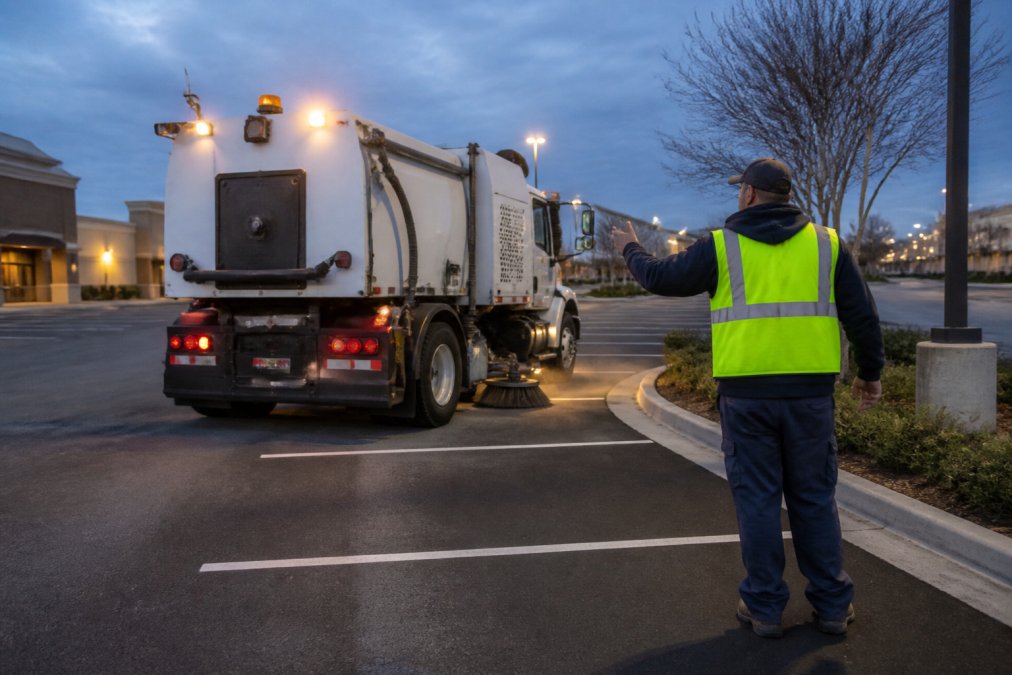
Routine sweeping is the backbone of any parking lot maintenance program. A vacuum truck or ride-on sweeper lifts sand, gravel, and litter before it gets ground into the asphalt by passing tires.
Pressure Washing, Gravel Removal, and Stain Treatment
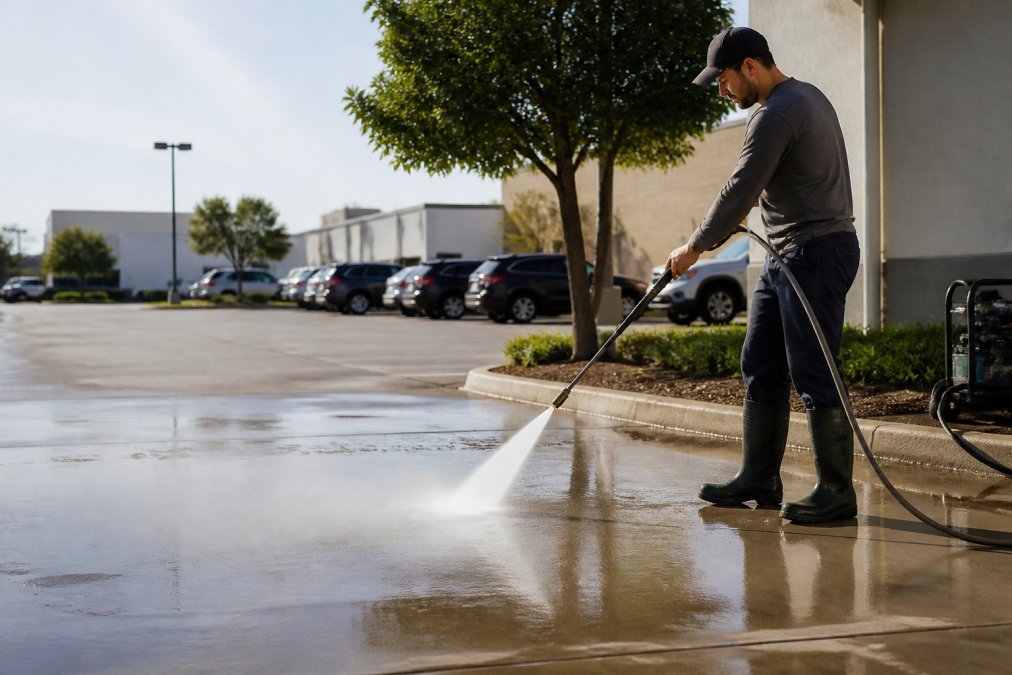
Some messes don't sweep away. Oil drips, rust stains, and mildew need pressure washing with the right surface cleaner and cleaning agent for the surface type.
Why Regular Parking Lot Maintenance Protects Your Property
Regular parking lot maintenance protects property value, reduces liability, and extends the life of the asphalt itself. A lot that gets swept on a schedule costs less to own over time than one cleaned only when complaints pile up.
Three things happen when maintenance slips:
- Surface integrity declines. Sand and gravel act like sandpaper under tires, wearing down the top layer of asphalt.
- Property liability rises. Litter, standing water, and uneven surfaces create slip and trip risks that fall on the owner.
- Curb appeal drops. First impressions form before a customer reaches the door, and a stained, littered lot sends the wrong signal.
How Often Should You Schedule Commercial Parking Lot Sweeping Frequency?
Commercial parking lot sweeping frequency depends on traffic volume, surrounding land use, and season. Most properties fall into one of three tiers, and matching the schedule to the property type is what keeps costs reasonable.
Daily, Weekly, or Monthly: Matching Frequency to Property Type
| Property Type | Recommended Frequency | Why |
|---|---|---|
| Grocery-anchored strip centers | Daily to 3x weekly | High foot traffic, food debris, cart traffic |
| Office buildings and medical campuses | Weekly | Moderate traffic, appearance-sensitive |
| Industrial parks and warehouses | Weekly to biweekly | Gravel, pallet debris, truck traffic |
| Parking garages | Weekly to monthly | Enclosed space, litter control, dust |
| Low-traffic retail and mixed-use | Monthly | Light use, budget-conscious |
The honest answer is that frequency should follow the debris, not the calendar. A strip center with a food tenant generates more litter in a day than an office park does in a week.
How to Calculate the ROI of a Sweeping Schedule
Most property managers don't struggle to pick a frequency, they struggle to justify it to ownership. The way to win that conversation is to translate sweeping into avoided cost, not a line item.
A practical framework:
- Estimate your debris load. Count the number of food tenants, drive-thru lanes, cart corrals, and landscape beds that border the lot. Each one raises the daily debris rate.
- Tie frequency to a failure point. Ask what happens if debris sits for a week instead of a day. Sand and gravel get crushed into the asphalt, oil stains set, and curb-line sediment reaches the drain. Each of those becomes a separate repair or compliance cost.
- Compare the two budgets. A skipped sweep is not free, it defers cost into pressure washing, crack sealing, sealcoating, or storm drain cleaning. In most cases the deferred cost is higher than the visits that were cut.
- Track the asset life. Asphalt that is kept clean and free of abrasive grit holds its surface longer between repaving cycles. Extending a repave by even a year changes the total cost of ownership more than any single cleaning invoice.
What Changes the Right Frequency
- Tenant mix. Food service, convenience retail, and any tenant with outdoor seating raise the daily load.
- Climate and season. Winter traction materials, spring pollen, and fall leaf drop each create a short-term spike that a standard schedule won't catch.
- Adjacent land use. Construction sites, unpaved lots, and mature trees all push debris into the lot.
- Event traffic. A property that hosts weekend events may need a post-event sweep even if the base schedule is weekly.
What Affects Parking Lot Pressure Washing Cost
Parking lot pressure washing cost varies with lot size, surface condition, stain severity, and access. Pricing depends on the specifics of your property, so the only reliable figure comes from an on-site estimate.
Factors that move the number:
- Square footage of concrete or asphalt to be cleaned
- Stain type and age, since rust and set-in oil take more time and product
- Surface material, as pavers, concrete, and asphalt each need different pressure and technique
- Access and water supply on site
- Frequency, because recurring contracts spread cost across the year
Storm Drain Compliance and Environmental Regulations
Storm drain compliance is a legal obligation, not a nice-to-have. Under the Clean Water Act, many municipalities require businesses to prevent pollutants from entering storm sewer systems, and parking lots are a primary source of that runoff.
How the Permit Framework Reaches Your Lot
Most commercial properties fall under a municipal separate storm sewer system (MS4) permit held by the local government. That permit requires the municipality to reduce pollutants in stormwater, and it passes obligations down to commercial sites through ordinances, site plan conditions, and inspection programs.
In practice, that means:
- Illicit discharge rules. Anything other than stormwater entering a drain, wash water, oil, sediment, or trash, can be treated as an illicit discharge (the EPA).
- Best management practices (BMPs). Regulators expect documented practices that keep pollutants out of the drain, and routine sweeping is one of the simplest.
- Inspection authority. Many jurisdictions give inspectors the right to enter commercial lots, photograph conditions, and issue notices of violation.
- Recordkeeping. Some programs require a maintenance log or a copy of the sweeping contract as proof of ongoing BMPs.
What Triggers Enforcement Attention
A lot doesn't need a spill to draw a notice. Common triggers include:
- Visible debris, trash, or sediment within a few feet of a drain inlet
- An oil sheen or dark staining on pavement near a drain
- Wash water from pressure washing flowing toward a storm inlet instead of being captured
- Dumpster pads with grease or leachate staining that reaches the pavement
- A history of complaints from adjacent property owners
How Professional Cleaning Supports Compliance
Professional sweeping and pressure washing address the compliance problem directly. Vacuum sweeping removes the material before rain carries it into the drain, and proper pressure washing includes capturing and disposing of wash water rather than letting it run off.
Benefits of Exterior Building Maintenance Contracts
The benefits of exterior building maintenance contracts come down to consistency and cost control. A recurring agreement locks in a schedule, spreads payments, and removes the guesswork of booking one-off visits.
How to Choose a Commercial Parking Lot Cleaning Provider
Choosing a commercial parking lot cleaning provider comes down to verification, not sales pitch. Ask for proof of experience, insurance, and a clear scope of work before you sign anything.
Use this checklist when evaluating providers:
- Do they carry liability insurance and can they show a certificate?
- Can they provide references from properties similar to yours?
- Is the scope of work written out, including sweeping, debris removal, and pressure washing?
- Do they offer flexible scheduling, including overnight service to avoid disrupting customers?
- Is pricing transparent, or are there add-on fees buried in the contract?
- Will they perform a site inspection before quoting?
- How do they handle waste disposal and wash water?
- Do they offer both one-time and recurring contracts?
Frequently Asked Questions
Is a parking lot cleaning business profitable?
Profitability depends on route density, equipment costs, and contract volume. Operators who secure recurring commercial parking lot cleaning services contracts for strip centers or industrial parks can build predictable monthly revenue because sweeping is a scheduled maintenance need, not a one-time purchase. Labor, fuel, disposal fees, and vacuum truck maintenance are the largest ongoing costs. Many commercial clients sign annual agreements, which reduces gaps between jobs and improves cash flow.
How often should a commercial parking lot be professionally cleaned?
Most commercial properties need sweeping at least weekly. High-traffic retail centers, restaurants, and grocery stores often require daily or multiple-times-per-week service because of litter, food debris, and winter traction materials. Office parks and industrial parks with lighter traffic can usually get by with weekly or biweekly visits. Your commercial parking lot sweeping frequency should be set by traffic volume, local storm drain compliance rules, and how visible debris affects curb appeal, not by a one-size-fits-all schedule.
What is the difference between parking lot sweeping and pressure washing?
Sweeping removes surface debris like litter, gravel, leaves, and winter traction materials using mechanical sweepers or vacuum trucks. Pressure washing uses water under pressure to strip embedded dirt, oil stains, gum, and mildew from asphalt and concrete. The two services address different problems. Sweeping handles routine litter control and dust suppression; pressure washing restores surface appearance and removes stains that sweeping cannot touch. Many property managers schedule both as part of a complete parking lot maintenance plan.
How does regular parking lot maintenance impact property value?
Consistent parking lot maintenance protects asphalt longevity by removing abrasive debris that wears down the surface, and it preserves curb appeal, which affects tenant retention and customer perception. A clean lot with clear striping and intact pavement signals that the property is well managed. For owners preparing to sell or lease, documented preventative maintenance and site inspection records can support a higher valuation because buyers see fewer deferred capital expenses.
How do I choose the right commercial cleaning contractor for my parking lot?
Ask for proof of insurance, a written scope of work, and references from similar properties. Confirm what equipment they use, whether they provide overnight service to avoid disrupting tenants, and how they handle waste disposal and storm drain compliance. Request a site inspection before signing anything. A provider that walks the lot, identifies problem areas, and offers a customized scheduled maintenance plan is more reliable than one that quotes a flat rate without seeing the property.
What safety regulations apply to commercial parking lot maintenance?
Commercial sweeping and pressure washing crews must follow OSHA workplace safety rules and EPA stormwater regulations that prohibit wash water and debris from entering storm drains. Many municipalities also require specific best management practices for surface cleaning, including containment and proper waste disposal. Property managers should ask contractors how they handle runoff, whether they use EPA-compliant equipment, and how they document compliance for environmental regulations.
What are the benefits of professional parking lot cleaning services?
Professional cleaning reduces property liability from slips, trips, and debris-related damage, extends asphalt longevity, and maintains curb appeal that attracts tenants and customers. It also supports storm drain compliance by keeping litter and sediment out of drainage systems. Regular service catches small issues like cracks or drainage problems before they become expensive repairs. For multi-property managers, a single vendor handling sweeping, pressure washing, and litter control simplifies scheduling and vendor management.
A clean parking lot is one of the few property investments that pays you back in curb appeal, lower liability, and longer asphalt life. Steve's Premium Pressure Washing handles commercial sweeping, pressure washing, and recurring maintenance with transparent upfront pricing, flexible scheduling, and soft wash technology that's safe for your surfaces. Get your estimate and put your lot on a schedule that actually fits how it's used.