 ultimate-guide
Hiring Reliable Exterior Cleaning Contractors in 2026
Table of Contents
- Why Hiring Reliable Exterior Cleaning Contractors Protects Your Property
- Finding Pressure Washing Services Near Me: How to Shortlist Local Pros
- Vetting Criteria: Questions to Ask Before You Hire
- Exterior Cleaning Contractor Insurance Requirements You Must Verify
- Understanding the Cost of Professional House Washing
- Standardized Safety Protocols and Quality Assurance Checklists
- Frequently Asked Questions
Last Updated: September 22, 2026
Why Hiring Reliable Exterior Cleaning Contractors Protects Your Property
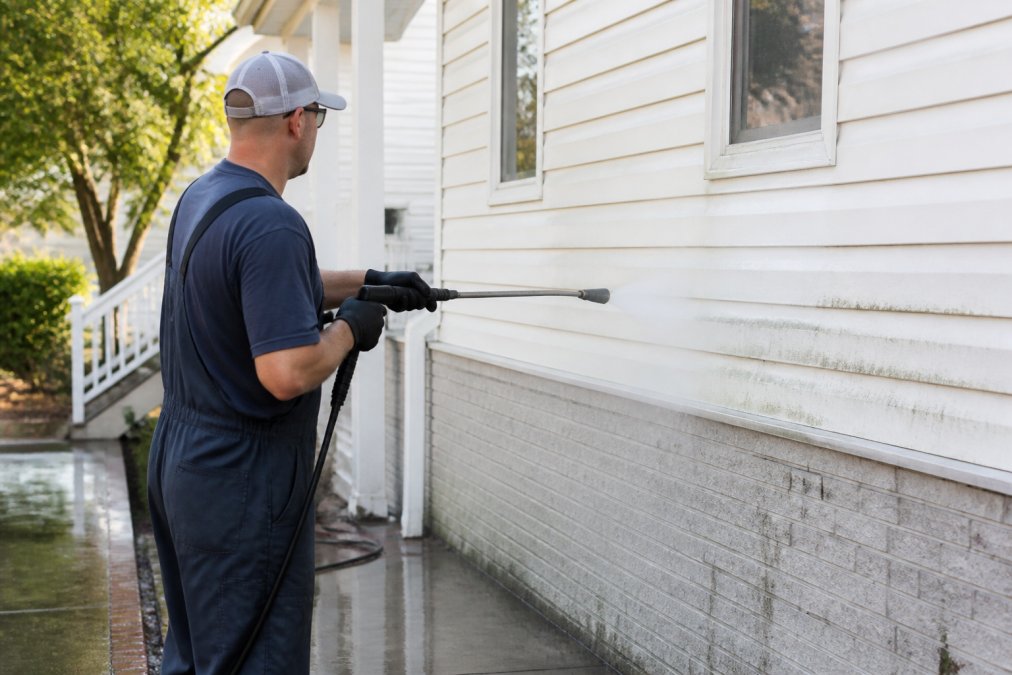
Hiring reliable exterior cleaning contractors is the single most effective way to protect your home's siding, driveway, and roof from the mold and mildew that thrive in humid climates. This guide breaks down exactly how to separate qualified professionals from the fly-by-night operators, so you can hire with confidence in 2026.
Finding Pressure Washing Services Near Me: How to Shortlist Local Pros
The fastest way to shortlist exterior cleaning contractors is to combine two sources: verified local business listings and direct referrals from neighbors whose properties you can actually inspect. Start with the Better Business Bureau's business lookup tool to confirm a company's complaint history before you call.
Where to Search and What to Ignore
Prioritize businesses with a physical local presence, an active license, and a portfolio of completed jobs you can view. Community groups and neighborhood referrals often surface contractors who have already proven themselves on properties similar to yours.
Red Flags That Signal an Unreliable Contractor
- Demands full payment upfront, before any work begins
- Cannot produce a license or certificate of insurance on request
- Quotes a price over the phone without a site inspection
- Pressures you with a same-day discount that expires immediately
- Has no verifiable local address or references
Vetting Criteria: Questions to Ask Before You Hire
The right vetting questions reveal whether an exterior cleaning contractor operates like a professional business or a side hustle. But asking the questions is only half the job, you also need to know what a credible answer sounds like and how to verify it independently. This section gives you both.
Licensing, Background Checks, and Proof of Work
Ask directly: Are you licensed to operate here, and do you run background checks on the technicians who come to my property? A legitimate company will answer without hesitation. Here is what to demand and how to verify each item:
- Business license. Ask for the license number and the name of the issuing authority. Most states and municipalities require a general business license, and some require a specific home improvement or specialty contractor license. You can verify status through your state or local licensing board's online lookup.
- Background checks. Ask whether the company runs criminal background checks on every technician, not just new hires. A reliable answer is specific: "Yes, we run a national criminal background check and a motor vehicle record check before anyone rides in a company truck."
- Proof of work. Request photos of completed residential and commercial jobs, ideally with addresses or neighborhoods you recognize. A portfolio of stock photos is a red flag; a portfolio of local homes is a green flag.
- Years in business and local address. Ask how long the company has operated under the current name and confirm a physical local address. A P.O. box alone is not a local presence.
References and Real Customer Reviews
Ask for two or three recent references in your area, then actually call them. When you call, ask three specific questions: Did the crew arrive on time? Was the final price the same as the estimate? Would you hire them again? The answers to those three questions tell you more than any star rating.
The Verification Table: What to Ask and What to Accept
| Vetting Question | What a Reliable Answer Looks Like | Red Flag Answer |
|---|---|---|
| Are you licensed and insured? | Provides license number and certificate of insurance on request | "We don't need that" or changes the subject |
| Do you background check staff? | Yes, for every technician, with specifics on what is checked | Avoids the question or says "we only hire people we know" |
| Can I see prior work? | Shares photos of local jobs and offers references | "Just trust us" or sends only stock images |
| Will you inspect before quoting? | Schedules a site visit and walks the property with you | Quotes blind over the phone |
| What PSI will you use on my siding? | Names a specific range and explains soft washing | "We'll figure it out when we get there" |
| Do you carry workers' comp? | Yes, and provides the certificate | "Our guys are independent contractors" |
| What happens if something is damaged? | Explains the claims process and provides it in writing | "That never happens" |
How to Verify the Answers
Do not take any of these answers at face value. Verification takes about 15 minutes and is the single best protection you have:
- Call the licensing board and confirm the license is active and in good standing.
- Call the insurance company listed on the certificate of insurance and confirm the policy is active and covers pressure washing or soft washing specifically.
- Call at least two references and ask the three questions above.
- Search the company name plus "complaint" or "lawsuit" and review what comes up.
Exterior Cleaning Contractor Insurance Requirements You Must Verify
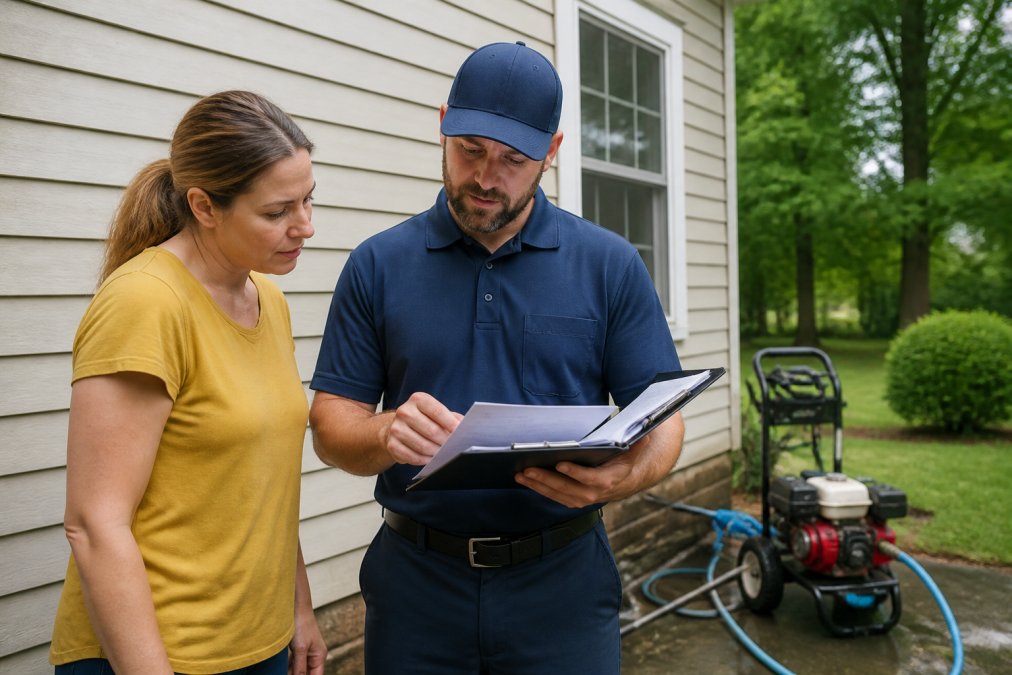
Verifying insurance is non-negotiable, and it is the step homeowners skip most often. Exterior cleaning contractor insurance requirements exist to protect you, not just the contractor.
General Liability and Workers' Compensation
General liability coverage pays for property damage if a technician cracks your driveway or damages siding. Workers' compensation covers injuries to workers while they are on your property. Without both, an on-site injury or accident could become your financial responsibility.
How to Confirm Coverage Is Active
Do not accept a verbal confirmation. Request a certificate of insurance and call the listed insurer to confirm the policy is currently active and covers the specific work being performed. A lapsed policy is worthless.
Understanding the Cost of Professional House Washing
The cost of professional house washing depends on the size and condition of your property, the surfaces involved, and the level of staining. Because every property is different, no honest contractor quotes a firm price before seeing the job in person.
What Drives the Price Up or Down
- Square footage of siding, driveway, and patio surfaces
- Severity of mold, mildew, or rust staining
- Number of stories and accessibility
- Frequency: one-time deep cleans cost more than recurring maintenance contracts
- Whether soft washing or surface restoration is required
Reading an Estimate Without Hidden Fees
A transparent estimate breaks down each service line and states what is included. Watch for vague line items like "miscellaneous" or "materials" with no explanation. Ask whether the quote covers the full job or just a portion.
Standardized Safety Protocols and Quality Assurance Checklists
Standardized safety protocols are important for professional exterior cleaning contractors. Most homeowners ask about price and insurance but never ask what safety standards the crew follows on site. That gap matters, because a contractor who cuts corners on safety is statistically more likely to cut corners on your property.
Job Site Safety and Equipment Standards
Ask the contractor to describe their safety program in specific terms. A reliable operation will reference the following, and an unreliable one will give vague answers like "we're careful."
- OSHA compliance. Exterior cleaning falls under the Occupational Safety and Health Administration's general industry and construction standards. Ask whether the company has a written safety program and whether crew members have completed OSHA 10 or OSHA 30 training. These are the baseline credentials for anyone working at height or around electrical fixtures.
- Ladder safety. The American National Standards Institute (ANSI) publishes the A14.2 standard for portable metal ladders, and the industry rule of thumb is the 4-to-1 ratio: for every 4 feet of working height, the base of the ladder sits 1 foot out from the wall. Ask how the crew secures ladders and whether they use stabilizers on uneven ground.
- Fall protection. For any work above 6 feet on a roof or elevated surface, OSHA requires fall protection. Ask what system the crew uses, harness and anchor point, guardrail, or safety net.
- Chemical handling. Soft washing relies on sodium hypochlorite (bleach) solutions. A professional crew wears chemical-resistant gloves, eye protection, and respiratory protection when mixing, and they keep Safety Data Sheets (SDS) on hand for every chemical on the truck.
- Electrical awareness. Water and electricity are a lethal combination. Ask how the crew identifies and avoids exterior outlets, fixtures, and service drops before spraying.
Equipment Standards That Signal Reliability
A reliable contractor's truck tells you a lot before anyone speaks. Look for:
- Commercial-grade pressure washing units with adjustable PSI, not consumer big-box store models
- Dedicated soft wash systems (12-volt pumps and proportioners) for siding and roofs
- Surface cleaners for flatwork, which prevent the zebra striping that comes from wand-only cleaning
- Water recovery or containment equipment if local stormwater rules require it
The Walkthrough Checklist Before Final Payment
Use this checklist to make reliability measurable. Do not release final payment until every box is checked.
- All surfaces cleaned to the agreed scope, compare against the original estimate line by line
- No damage to siding, concrete, paint, or landscaping
- Windows, fixtures, outlets, and light fixtures intact and dry
- Water runoff properly managed; no standing water or chemical burn on grass
- Plants and outdoor furniture returned to original position
- Final walkthrough completed with you present, in daylight
- Invoice matches the original estimate, no surprise line items
- Written warranty or workmanship guarantee provided in writing
Frequently Asked Questions
What questions should I ask before hiring an exterior cleaning company?
Ask about licensing, insurance coverage, and whether they use pressure washing or soft washing for your surface type. Request references from similar jobs and a written estimate that lists every line item. Confirm how they handle stubborn stains like rust or mold, and ask what happens if something gets damaged. A reliable contractor will answer all of these without hesitation and provide documentation on request.
How do I verify if an exterior cleaning contractor is insured?
Request a Certificate of Insurance directly from the contractor and call the insurance company listed on it to confirm the policy is active. Check that general liability coverage meets your state's minimum and that workers' compensation is in place if they bring a crew. Exterior cleaning contractor insurance requirements vary, but any legitimate provider should carry both. Never accept a verbal assurance alone.
What is the difference between pressure washing and soft washing?
Pressure washing uses high-pressure water to blast away dirt and grime from hard surfaces like concrete driveways and pavers. Soft washing uses lower pressure combined with cleaning solutions to safely treat siding, roofs, and delicate surfaces where high pressure could cause damage. Ask which method the contractor plans to use on each part of your property, and be wary of anyone who uses pressure washing on everything.
How often should I have my home's exterior professionally cleaned?
Most homes benefit from a professional exterior cleaning once a year, though humid climates and properties surrounded by trees may need service every six to nine months. Driveways and patios often need more frequent attention than siding. Regular cleaning prevents mold, mildew, and algae from taking hold, which is cheaper to maintain than to remove after it has deeply set into surfaces.