 ultimate-guide
Why Pressure Washing Damages Soft Surfaces
Table of Contents
- How High Pressure Causes Surface Damage
- Dangers of High Pressure Washing on Siding and Wood
- Soft Washing vs Pressure Washing: What's the Difference?
- How to Safely Clean Vinyl Siding Without Damage
- Material-Specific PSI Thresholds and Nozzle Selection
- Signs of Pressure Washing Damage and What to Do Next
- Professional vs DIY Cleaning: Weighing the Risks
- Frequently Asked Questions
Last Updated: September 24, 2026
How High Pressure Causes Surface Damage
Pressure washing damage starts at the microscopic level, and the mechanism is worth understanding because it explains why damage often appears weeks after a surface looks fine. A pressure washer converts flow and pressure into kinetic energy. When that stream hits a soft surface, the energy has to go somewhere. On hard, non-porous material, most of it deflects sideways and carries dirt with it. On soft or porous material, the stream penetrates open pores and grain instead of gliding across them.
Three mechanisms do the damage:
- Mechanical abrasion. The stream acts like a fine chisel. On wood, it shears the softer earlywood between the harder latewood growth rings, leaving raised grain that never lies flat again. On stucco, it pits the cementitious finish and opens hairline cracks.
- Pore pressurization. Water forced into a pore compresses the air behind it. When the stream stops, that trapped air pushes back and can spall the surface from the inside, the same principle that makes a sealed brick crack in a freeze.
- Capillary wicking. Once pores are saturated, water wicks laterally through the material, traveling well beyond the spot you sprayed. That is how a small blast on a wood board becomes rot several inches away.
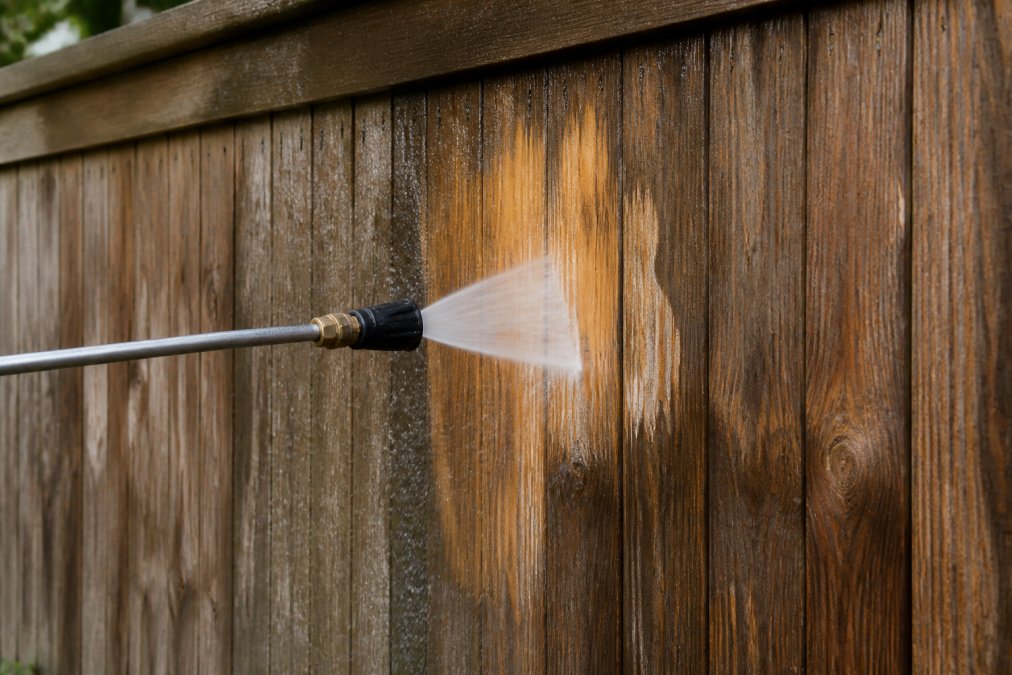
Wood is the clearest example. A concentrated spray can gouge the grain, lift fibers, and force moisture deep into the board. Trapped water causes swelling, then warping, then rot. By the time you see the damage, the structural harm is already underway.
Stucco behaves differently but suffers similarly. The surface layer is porous, and a direct blast can pit the finish and crack the outer shell. Once cracked, water finds its way behind the wall, where it damages the substrate and promotes mold growth inside the structure.
The long-term angle most guides skip: damage compounds. A single pass that opens pores or hairline cracks creates new pathways for the next rain, the next freeze, and the next mold cycle. A surface that survives one cleaning may fail after three, because each pass widens the microscopic channels water uses to get in. That is why a deck or stucco wall can look untouched for a season and then show rot, peeling, or efflorescence the following spring.
The mechanism is consistent across materials: pressure overwhelms the surface's ability to resist, and mechanical abrasion does the rest. Surface etching, fiber separation, and water intrusion are the results.
Dangers of High Pressure Washing on Siding and Wood
The dangers of high pressure washing on siding and wood come down to three failure points: water intrusion, surface degradation, and long-term structural damage. Each one is expensive to fix and easy to prevent.
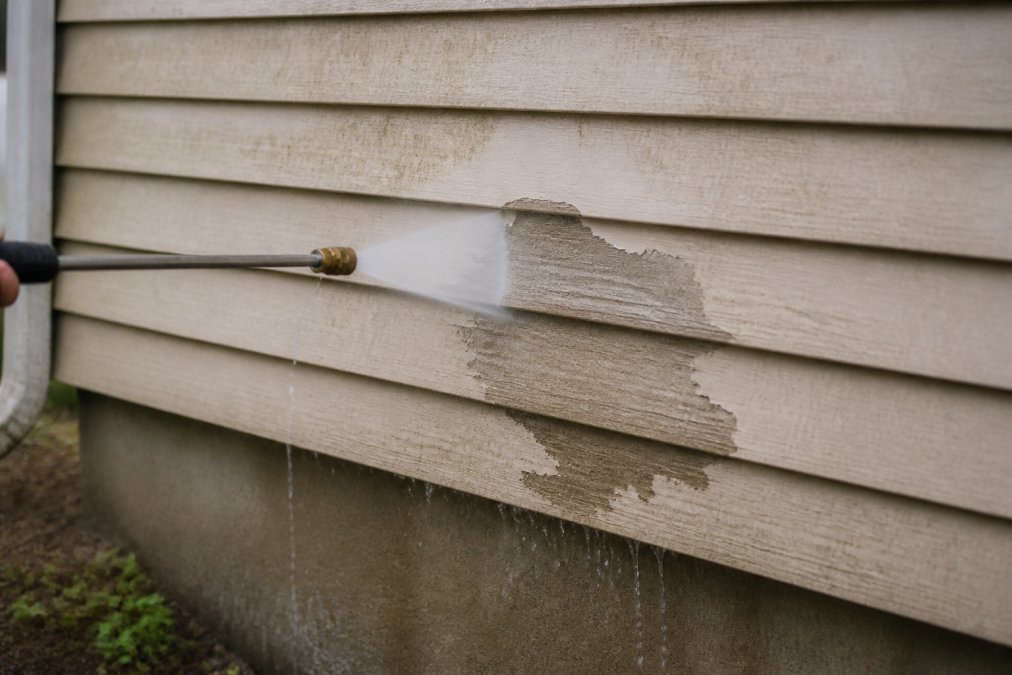
Vinyl siding is more forgiving than wood, but it's not invincible. High pressure can force water behind the panels, where it sits against the sheathing and framing. That trapped moisture leads to rot, mold, and eventually the need to replace entire sections of wall.
Wood siding and decks are far more vulnerable. A high-pressure stream strips the softer grain between harder growth rings, leaving a permanently raised, fuzzy texture.
Soft Washing vs Pressure Washing: What's the Difference?
Soft washing is a low-pressure cleaning method that relies on chemical cleaning agents and dwell time rather than mechanical force. Pressure washing uses a high-pressure stream to physically blast dirt away. The two approaches solve different problems.
| Feature | Soft Washing | Pressure Washing |
|---|---|---|
| Pressure level | Under 500 PSI | 1,300-4,000 PSI |
| Primary action | Chemical + dwell time | Mechanical force |
| Best for | Siding, wood, stucco, roofs | Concrete, brick, pavers |
| Damage risk | Low on delicate surfaces | High on soft materials |
| Mold removal | Kills at the root | Rinses surface only |
How to Safely Clean Vinyl Siding Without Damage
Learning how to safely clean vinyl siding starts with one rule: use low pressure and let chemistry do the work. Vinyl is durable, but it oxidizes over time, and high pressure accelerates that breakdown.
Here's the safe approach:
- Rinse the surface first with a garden hose to remove loose dirt and debris.
- Apply a cleaning solution designed for vinyl siding, working from the bottom up to prevent streaking.
- Let the solution dwell for 10-15 minutes. Don't let it dry out.
- Scrub gently with a soft-bristle brush on stubborn spots.
- Rinse with low pressure, again from the bottom up.
- Inspect for oxidation and treat any chalky areas with a vinyl-safe cleaner.
Material-Specific PSI Thresholds and Nozzle Selection
Every exterior material has a PSI ceiling. Exceeding it causes damage; staying well below it keeps the surface intact. But PSI at the pump is not the number that matters, it is the pressure at the surface, and that changes with distance, angle, nozzle orifice, and flow rate. Treat the table below as a starting ceiling, then adjust for technique.
| Material | Safe PSI Range | Recommended Nozzle | Risk Above Threshold |
|---|---|---|---|
| Soft wood / decks (cedar, pine) | 500-600 | 40-degree | Grain damage, splintering |
| Hardwood (ipe, teak) | 800-1,200 | 25-40 degree | Surface fuzzing, tannin bleed |
| Vinyl siding | 1,300 max | 25-40 degree | Oxidation, water intrusion |
| Stucco | 500-600 | 40-degree | Pitting, cracking |
| Painted surfaces | Under 1,000 | 25-40 degree | Paint removal, peeling |
| Concrete | 2,500-4,000 | 15-25 degree | Scarring if too close |
| Brick | 1,500-2,500 | 25-degree | Mortar erosion |
Three variables override the table:
- Distance. Pressure falls off roughly with the square of the distance from the nozzle. A 2,500 PSI unit held three feet away delivers a fraction of the force it delivers at six inches. When in doubt, back up before you dial down.
- Angle. A perpendicular stream concentrates force on one spot. Angling the nozzle 30-45 degrees lets the water sheet across the surface and lift dirt instead of driving it in.
- Nozzle orifice and flow (GPM). A narrower orifice raises impact force at the same pump pressure. A wider orifice spreads the same flow over more area. Flow matters too: two machines rated at the same PSI behave differently if one moves twice the water. Higher GPM cleans faster but also delivers more total energy to the surface.
Signs of Pressure Washing Damage and What to Do Next
Pressure washing damage is usually visible within days, but some signs take weeks to appear. Catching them early limits the repair cost.
Watch for these signs:
- Fuzzy or raised wood grain after the surface dries
- Peeling or blistering paint that wasn't there before
- Cracked or pitted stucco with a rough, uneven texture
- Chalky residue on vinyl siding that won't rinse away
- Water stains or discoloration appearing inside the home
- Concrete scarring that leaves a permanently rough surface
- Mold returning within weeks of cleaning
Professional vs DIY Cleaning: Weighing the Risks
The DIY-versus-professional decision comes down to equipment, technique, and risk tolerance. A rental unit from a hardware store typically delivers more pressure than most homeowners need, with none of the pressure regulation that protects delicate surfaces.
DIY risks:
- Rental units often lack adjustable pressure
- Wrong nozzle selection causes instant damage
- No access to professional-grade cleaning solutions
- Mold returns because the roots weren't killed
- Water intrusion from improper technique
Professional advantages:
- Equipment matched to each surface
- Soft wash technology for delicate materials
- Proper chemical application and dwell time
- Insurance coverage if something goes wrong
- Consistent results across multiple properties
Frequently Asked Questions
Which is better for cleaning a house, soft washing or pressure washing?
Soft washing is safer for most house exteriors, especially vinyl siding, wood, and stucco. It uses low pressure (under 500 PSI) combined with cleaning solutions to remove mold, mildew, and algae without forcing water behind siding or etching surfaces. Pressure washing works well on hard, durable surfaces like concrete driveways and brick patios. For a typical home exterior, soft washing is the better choice because it cleans effectively while protecting the materials.
Where should you not use a pressure washer?
Avoid pressure washing on asphalt shingles, painted wood, vinyl siding, stucco, and any surface with existing cracks or peeling paint. High pressure can strip shingle granules, gouge wood grain, crack stucco, and force water behind siding, leading to mold growth and structural damage. Also avoid windows and doors, where seals can fail. For these delicate surfaces, use soft washing or low-pressure cleaning with appropriate cleaning agents instead.
Is pressure washing bad for your house?
Pressure washing itself is not bad when used correctly on the right surfaces. The danger comes from using too much pressure on soft materials. Vinyl siding can crack or oxidize, wood can splinter, and stucco can pit. Water intrusion behind siding can cause rot and mold. Always match the PSI to the material and use a wide spray pattern. If you are unsure, soft washing is a safer alternative for house exteriors.
How does high pressure affect vinyl siding and wood?
On vinyl siding, high pressure can force water behind panels, causing mold and mildew growth. It can also crack the vinyl or strip the finish, leading to oxidation and fading. On wood, high pressure etches the grain, splinters the surface, and removes protective stains. Both materials require low pressure (under 500 PSI for vinyl, under 1,200 PSI for wood) and a fan tip. Soft washing with biodegradable cleaners is the safest method for these surfaces.