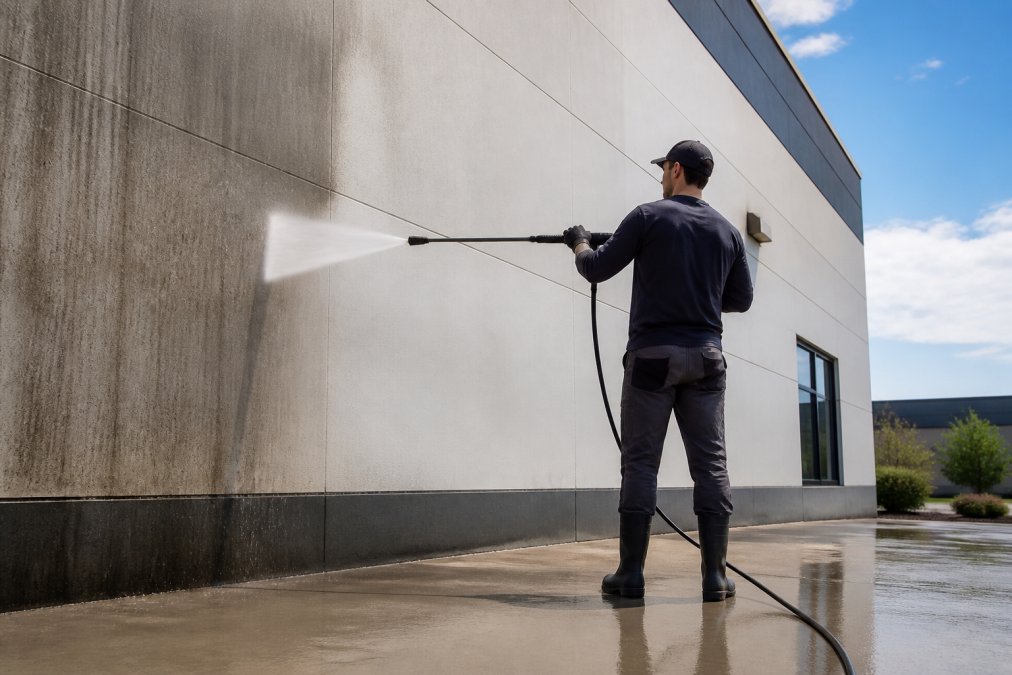
 ultimate-guide
How Often to Pressure Wash a Building: 2026 Guide
Table of Contents
- How Often to Pressure Wash a Building: The Short Answer
- Factors That Change Your Cleaning Frequency
- Recommended Cleaning Schedule by Siding Material
- Signs Your Building Needs Pressure Washing
- Soft Washing vs Pressure Washing: Which Method to Use
- The Cost of Professional Pressure Washing
- Common Mistakes That Damage Siding and Surfaces
- Frequently Asked Questions
Last Updated: September 13, 2026
How Often to Pressure Wash a Building: The Short Answer
Most buildings need a full pressure wash once a year, with a lighter soft wash every six to eight months if the exterior faces heavy shade, humidity, or organic growth (extension.psu.edu). That is the baseline. In practice, the right schedule depends on your siding material, your local climate, and how much tree cover or pollution your property sits under. This guide breaks down exactly how often to pressure wash building exteriors based on what they are actually made of and where they stand, so you stop guessing and start maintaining on a schedule that protects your investment.
The cost of neglect is not just cosmetic. Algae, mildew, and dirt hold moisture against siding and masonry, and that trapped moisture accelerates rot, staining, and surface breakdown. A building washed on time lasts longer and looks better between washes.
Below, we cover the factors that shift your timeline, a material-by-material schedule, the warning signs that mean you are already overdue, and how to choose between soft washing and pressure washing so you clean without damage.
Factors That Change Your Cleaning Frequency
No single schedule fits every building. Three variables move your timeline more than anything else: moisture, material, and exposure to organic matter.
Climate and Humidity Levels
Humidity is the single biggest driver of how fast a building gets dirty. In warm, humid climates, mold growth and mildew can reappear within months of a cleaning, especially on north-facing walls that stay damp and shaded (the EPA). High humidity also feeds algae buildup on concrete, pavers, and stucco. Buildings in drier climates can often stretch to an 18-month cycle, while humid regions push most owners toward twice-a-year maintenance.
UV exposure matters too. Strong sun breaks down dirt and organic film on exposed surfaces faster, but it also degrades paint and sealant, so sun-facing walls may look chalky or faded rather than green. That chalkiness is a sign the surface needs cleaning and possibly resealing.
Siding Material and Surface Type
The material on your building sets both the frequency and the method. Vinyl siding, wood siding, stucco, and brick masonry each tolerate different pressure levels and hold onto dirt differently. Porous surfaces like stucco and untreated wood trap moisture and organic growth, so they tend to need more frequent attention. Smooth surfaces like vinyl shed dirt more readily but show streaks and mildew clearly.
Delicate materials also rule out high-pressure cleaning entirely. Using the wrong pressure on stucco or older wood can force water behind the surface and cause damage that costs far more to fix than the wash would have cost.
Recommended Cleaning Schedule by Siding Material
Match your frequency to your material and you avoid both over-washing and under-washing. The schedule below pairs each surface with a realistic interval, a safe pressure range, and the method that surface actually tolerates. The PSI figures are working ranges most exterior cleaning practitioners use; always confirm against your siding manufacturer's written cleaning instructions before you start, because those instructions govern your warranty.
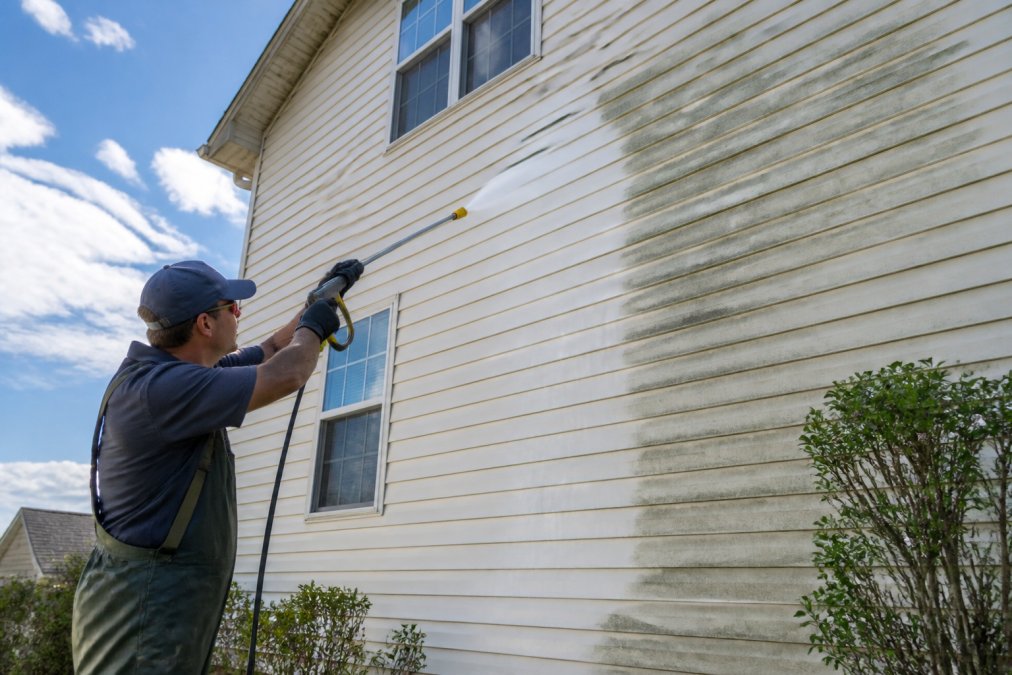
Vinyl, Wood, Stucco, and Brick Masonry
- Vinyl siding: Once a year. Vinyl is thin and flexible; high pressure forces water behind panels and can crack the finish at panel edges and lock tabs. Most vinyl manufacturers specify low-pressure cleaning with a mild detergent and warn that abrasive or high-pressure methods can void the finish warranty.
- Wood siding: Every 12 to 18 months, and only with low pressure. Wood fibers soften when saturated, so a concentrated stream etches grain and drives water into end grain and joints, which is where rot starts. Cedar and other softwoods are the most vulnerable. Plan on a full dry-out and a reseal after cleaning.
- Stucco: Every 12 months, soft wash only, ideally applied with a fan tip from a distance and rinsed at low pressure. Stucco is porous and cement-based; high pressure pits the surface, opens hairline cracks, and forces water behind the finish coat, where it can delaminate the stucco from the substrate. Once that happens, patching is a masonry job, not a cleaning job.
- Brick masonry: Every 12 to 24 months. Brick itself is durable, but the mortar joints are softer than the brick and erode under pressure (peer-reviewed research). Keep pressure low and rely on a detergent application to lift dirt. Never direct a concentrated stream at mortar lines. Older brick with soft, lime-based mortar is especially vulnerable.
- Fiber cement siding: Every 12 to 18 months, soft wash at low pressure. Fiber cement holds paint well but can absorb water at cut edges and joints if pressure drives it in.
- Painted surfaces (any substrate): Clean before the paint film fails. Once paint chalks or peels, washing alone will not restore it, and high pressure will strip what is left.
| Siding Material | Frequency | Safe Pressure Range | Recommended Method |
|---|---|---|---|
| Vinyl siding | Annually | 500-1,200 PSI | Soft washing / low pressure |
| Wood siding | Every 12-18 months | 500-1,000 PSI | Low pressure, then reseal |
| Stucco | Annually | Under 500 PSI | Soft washing only |
| Brick masonry | Every 12-24 months | 500-1,000 PSI | Low pressure + detergent |
| Fiber cement | Every 12-18 months | Under 1,200 PSI | Soft washing |
Signs Your Building Needs Pressure Washing
Your building will tell you when it is due. Watch for these signals before the grime becomes permanent staining.
- Green or black streaks on siding, especially on shaded walls
- Chalky white residue on painted or sealed surfaces
- Dark patches on concrete, driveways, or walkways
- Visible mold growth or mildew around windows, trim, and eaves
- Algae buildup on north-facing walls that stays damp
- Dull, dingy appearance that a garden hose will not touch
A simple visual inspection twice a year, once in spring and once in fall, catches most of these early. Check the shaded side of the building first, since that is where organic growth starts. If a surface feels slick or slimy, that is a living film of algae or mildew, and it will spread if left alone.
Soft Washing vs Pressure Washing: Which Method to Use
Soft washing and pressure washing are not interchangeable, and choosing wrong is how siding gets damaged. Soft washing uses low pressure combined with cleaning solution to kill and remove organic growth. Pressure washing uses high-pressure water to blast away dirt and grime mechanically.
For building exteriors, soft washing is usually the safer choice. It cleans vinyl, stucco, wood, and painted surfaces without forcing water into seams, and the cleaning solution keeps mildew and algae from returning as quickly. Pressure washing is better suited to hard, flat surfaces like concrete driveways, walkways, and parking areas where high pressure does no harm.
The distinction matters for longevity. Soft washing treats the cause of the staining, while pressure washing removes what is on the surface. On a building exterior, treating the cause is what keeps it clean longer.
The Cost of Professional Pressure Washing
Knowing what drives the number up or down is what lets you compare quotes honestly instead of guessing.
What Actually Drives the Price
- Square footage and number of stories. A two-story wall takes longer, needs taller equipment, and carries more risk than a single-story wall of the same area. Height is often the single biggest multiplier.
- Surface material. Soft-wash-only surfaces like stucco and painted wood take more time, more solution, and more care than concrete. Delicate materials cost more per square foot because the work is slower.
- Level of soiling. A light annual rinse is a different job than years of built-up algae, mildew, and staining. Heavy organic growth may need a stronger mix, a longer dwell, and sometimes a second application.
- Detergent and treatment. Soft washing relies on cleaning solution, not pressure, so chemical cost is part of the quote. Eco-friendly or specialty agents cost more than basic mixes.
- Access and prep. Landscaping, parked vehicles, windows, light fixtures, and outdoor furniture all need covering or moving. Tight lots and gated properties add labor.
- Water and power access. If the provider has to bring a water tank or generator because there is no accessible spigot or outlet, expect a surcharge.
- Recurring vs. one-off. Maintenance contracts, monthly, quarterly, or semi-annual visits, typically cost less per visit than a single call because the provider can route the work efficiently and the surfaces never get badly fouled.
How to Compare Quotes
Ask each provider for the same four things: the scope in writing (which surfaces, which method), the pressure range they will use, whether detergent is included, and whether the price is flat or hourly. A low hourly rate with no scope cap can cost more than a higher flat rate. A quote that does not name the method is not a quote you can compare.
For commercial and multi-building properties, ask specifically about a maintenance contract. Spreading visits across a portfolio lowers the per-visit cost and keeps every building on the same schedule, which is cheaper than reacting to each one separately.
For a current estimate on your building, request a quote from Steve's Premium Pressure Washing and get a clear, itemized price before you commit.
Common Mistakes That Damage Siding and Surfaces
Most exterior damage from washing comes down to a handful of avoidable errors. The most frequent is using too much pressure on a surface that cannot take it. Vinyl can crack, wood can splinter and absorb water, and stucco can pit.
Other mistakes we see regularly:
- Skipping detergent and relying on pressure alone, which strips paint without killing the mildew underneath
- Using the wrong nozzle tip, which concentrates force into a damaging stream
- Washing upward and forcing water behind siding panels
- Ignoring the manufacturer's warranty terms, which may require specific cleaning methods to stay valid
- Letting organic growth sit until it stains, when early cleaning would have been simple
That last point connects to a bigger issue: warranty implications. Many siding and roofing warranties specify acceptable cleaning methods, and using high pressure or harsh chemicals can void coverage. Before you or anyone else washes your building, check the warranty. It is the cheapest insurance you have.
Keeping a building clean is less about reacting to grime and more about staying ahead of it. The buildings that look best year after year are the ones washed on a schedule, matched to their material and climate, before damage sets in. At Steve's Premium Pressure Washing, we bring 10+ years of experience and safe soft wash technology to every job, backed by transparent upfront pricing, no hidden fees, and flexible scheduling that works around your tenants and customers. As a woman owned and operated, family-owned business, we treat your property like our own and deliver spotless results tailored to what your building actually needs. Get started with Steve's Premium Pressure Washing and protect your curb appeal before the next season of growth takes hold.
Frequently Asked Questions
How often should I pressure wash my building in a humid climate?
In humid climates with high mold and mildew risk, plan on pressure washing your building once or twice a year. Check for algae buildup and mildew after the rainy season and schedule a wash if you see green or black streaks forming on north-facing walls.
What are the signs my building needs pressure washing?
The clearest signs your building needs pressure washing include green algae buildup, black mildew streaks, chalky oxidation on siding, and dirt collecting around windows and trim. You may also notice a dull or faded appearance, especially on north-facing walls that stay damp longer. If organic matter has started growing in caulk lines or on walkways, it's time to schedule a professional cleaning.
Does pressure washing damage siding or paint?
Pressure washing can damage siding or paint when the pressure is too high or the nozzle is held too close. Soft washing with low pressure and detergent is safer for wood, stucco, and painted surfaces. A professional uses the right nozzle tips and detergent application to clean without stripping paint or forcing water behind siding panels.
How much does professional pressure washing cost?
The cost of professional pressure washing depends on building size, surface type, accessibility, and how much mold or mildew has built up. Request a written estimate that lists what's included, such as detergent application, surface treatment, and any follow-up visits for stubborn stains like rust or oxidation.