 how-to
Cleaning Mold Off Patio Pavers Effectively
Table of Contents
- Why Mold Grows on Patio Pavers in Humid Climates
- Tools and Safety Gear You Need Before You Start
- The Best Mold Cleaner for Concrete Pavers: Natural vs. Chemical Options
- Step-by-Step Guide to Cleaning Mold Off Patio Pavers Effectively
- How to Prevent Mold on Patio Pavers Long-Term
- When to Call Professional Paver Cleaning Services
- Frequently Asked Questions
Last Updated: September 15, 2026
Why Mold Grows on Patio Pavers in Humid Climates
Mold on patio pavers is a moisture problem before it is a cleaning problem. Pavers stay damp longer than homeowners expect, so growth returns within weeks unless conditions change.
Concrete and clay pavers are porous, holding moisture after rain, irrigation overspray, and evening condensation. In humid climates that film sits for hours, and shade means the surface rarely dries completely.
The U.S. Environmental Protection Agency's guide to mold and moisture control makes the core point plainly: mold needs moisture, and controlling moisture is the only reliable way to control mold. Cleaning removes what's there today. Managing shade, drainage, and drying time is what keeps it from coming back.
Identifying Mold vs. Algae vs. Mildew on Concrete Pavers
Mold, algae, and mildew look similar but respond to different treatments, so identify them before buying a cleaner.
- Green algae shows up as a slick green film, often in shade-prone areas and along joint lines. It feels slimy when wet and turns powdery as it dries.
- Mildew reads as a flat gray or white powdery growth, usually on the surface rather than embedded in the paver.
- Mold is typically black or dark green and tends to look speckled or patchy. On pavers, it often clusters where water pools.
- Lichen is the tough one: a crusty, gray-green growth that clings tightly and needs more dwell time and scrubbing than the others.
A common mistake is assuming every dark stain is mold. Rust, leaf tannin, and efflorescence (white mineral haze leaching from concrete) all get misdiagnosed as organic growth. Test a small area first.
Tools and Safety Gear You Need Before You Start
The right kit for cleaning mold off patio pavers is smaller than most people think, but skipping safety items is where DIY jobs go wrong. You need a stiff bristle brush, a pump sprayer, a hose, and a way to rinse without flooding the joints.
For equipment, gather:
- A stiff bristle brush with a long handle, so you're not on your knees for an hour
- A pump sprayer for even application of your cleaner
- A garden hose with a spray nozzle
- A plastic scraper for lichen and caked growth
- Optional: a pressure washer on a low setting, used carefully and never on full blast near joints
Protective Eyewear, Gloves, and Chemical Safety
Protective eyewear and chemical-resistant gloves are non-negotiable with bleach or specialized cleaners. Splashback is the most common injury here, and it's entirely preventable.
Add closed-toe shoes, long sleeves, and old clothes. With chlorine-based products, keep the area ventilated and never mix bleach with ammonia or acid-based cleaners, that produces dangerous gas, not a stronger cleaner.
The Best Mold Cleaner for Concrete Pavers: Natural vs. Chemical Options
There is no single best mold cleaner for concrete pavers; the right choice depends on how bad the growth is and what your pavers can tolerate. Natural options handle light surface growth; chemical options handle heavy or embedded growth faster, with more care required.
Natural cleaners are safer for plants, pets, and runoff but need more scrubbing and repeat applications. Chemical cleaners work faster and kill deeper but demand protective gear and careful runoff management.
Match the Cleaner to the Paver Material
Treating every paver the same is the fastest way to etch a surface or strip a finish. The material under the mold should drive your product choice.
- Concrete pavers (including tumbled and interlocking styles): The most forgiving surface. They tolerate diluted bleach, oxygenated cleaners, and vinegar. Avoid anything with muriatic acid, which attacks the cement binder and leaves a permanently etched, sandy texture.
- Clay brick pavers: Dense and fired, so they resist most cleaners, but they are also more porous at the surface and can absorb a bleach solution unevenly, causing light blotches. Stick to oxygen-based cleaners or a mild dish soap solution, and always pre-wet.
- Natural stone (bluestone, travertine, slate, limestone): The most sensitive category. Acidic cleaners like vinegar will dull or etch calcium-based stone such as travertine and limestone. Bleach can discolor slate and some sandstones. Use a pH-neutral stone cleaner or a dedicated oxygenated paver cleaner, and test on a hidden corner first.
- Sealed pavers of any material: Aggressive cleaners strip the sealer along with the mold, which means you trade a cleaning problem for a resealing problem. Use the mildest option that works and plan to reseal sooner.
Quick field test: drip a few drops of cleaner on an inconspicuous paver, wait five minutes, and wipe. If the surface dulls, darkens, or feels rougher, don't use it across the patio.
White Vinegar and Dish Soap Solutions
White vinegar is the most common starting point for light mold and mildew on pavers. Its acidity disrupts surface growth, and dish soap helps the solution cling instead of running off.
Mix roughly equal parts white vinegar and water in a sprayer, add a few drops of dish soap, and apply. Let it dwell 10 to 15 minutes, then scrub with your stiff bristle brush and rinse thoroughly, often enough for light green algae.
The limitation: vinegar won't kill deep-rooted mold or lichen, and it is off-limits on limestone, travertine, and any acid-sensitive stone. If growth returns within weeks, you're treating the symptom, not the source.
Diluted Bleach and Specialized Cleaners
A diluted bleach solution handles heavy mold and algae that vinegar can't touch.
Manage the Runoff Before You Start
Step-by-Step Guide to Cleaning Mold Off Patio Pavers Effectively
Step 1: Clear the Area and Pre-Rinse
Step 2: Apply Your Cleaner and Let It Dwell
Step 3: Scrub, Rinse, and Repeat
| Step | What You Do | Time | Watch For |
|---|---|---|---|
| 1. Clear and pre-rinse | Remove items, wet the surface | 10-15 min | Dry pavers absorbing cleaner unevenly |
| 2. Apply and dwell | Spray cleaner, let it sit | 10-15 min | Cleaner drying out before scrubbing |
| 3. Scrub and rinse | Brush joints, rinse fully | 20-30 min | Missed growth in shaded joints |
How to Prevent Mold on Patio Pavers Long-Term
Fix the Water and Shade First
Restore Joint Sand After Cleaning
Seal the Pavers Once They Are Fully Dry
A Seasonal Maintenance Calendar
| Season | Task | Why It Matters |
|---|---|---|
| Early spring | Full clean, inspect joints, re-sand if needed, reseal if the prior coat is worn | Removes winter growth before the warm, wet season |
| Late spring | Trim overhanging branches, check irrigation heads, clear debris from joints | Cuts shade and standing water that feed mold |
| Summer | Light rinse and quick brush of shaded joints every few weeks | Stops growth from establishing during peak humidity |
| Early fall | Clear fallen leaves promptly, especially from shaded corners | Leaf litter holds moisture against the surface |
| Late fall | Final full clean, confirm drainage is clear before winter | Prevents a damp, debris-covered surface sitting all winter |
| Winter | Spot-treat any green film after rain, keep gutters and downspouts clear | Reduces the starting load for spring |
When to Call Professional Paver Cleaning Services
Frequently Asked Questions
Does bleach or vinegar work better for killing black mold on patio pavers?
Both work, but they suit different situations. White vinegar is a mild acid that breaks down mineral deposits and kills many mold species on porous surfaces, making it a good first choice for routine cleaning and eco-friendly runoff management. Diluted bleach solution kills mold faster and penetrates deeper into porous surface crevices, but it can damage nearby plants and requires careful rinsing. For heavy black mold on concrete pavers, many homeowners start with vinegar for light growth and move to a diluted bleach solution for stubborn stains.
Will pressure washing damage my patio pavers or joint sand?
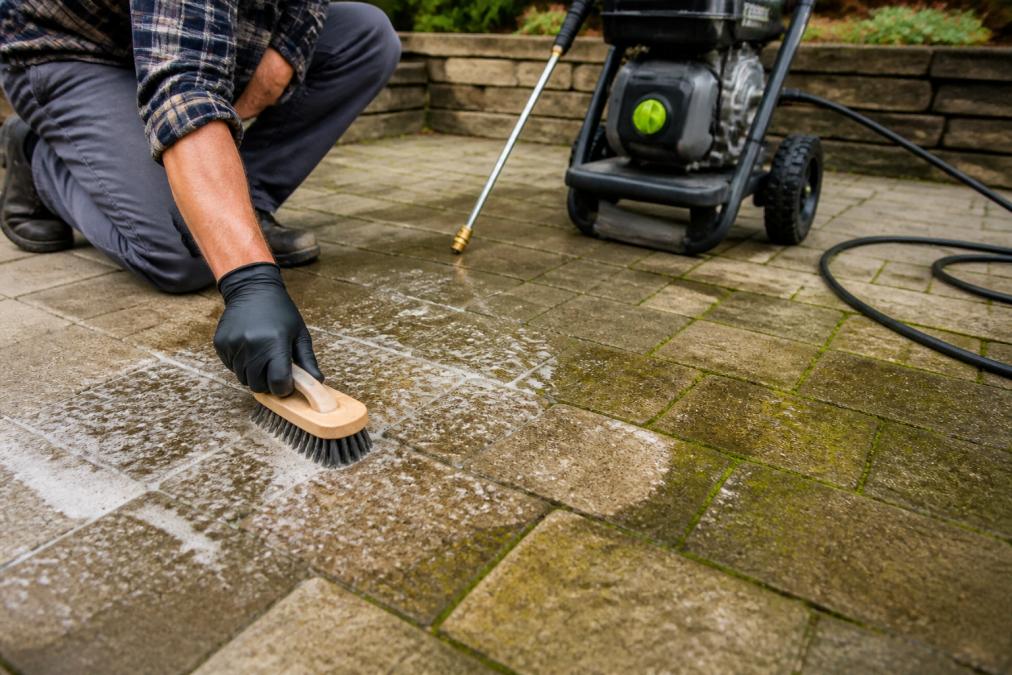
A pressure washer can damage pavers if you use too much pressure or hold the wand too close. The force can erode joint sand, chip the surface, and strip away any existing paver sealer. Use a surface cleaner attachment to distribute pressure evenly, keep the nozzle at least 12 inches away, and stay under 2,500 PSI for concrete pavers. If your pavers are older or already have loose joint sand, a soft wash or hand scrubbing with a stiff bristle brush is safer.
How often should I clean my patio pavers to prevent mold from coming back?
In humid climates, plan on a light cleaning every three to four months and a deeper clean once or twice a year. Focus on shade-prone areas and spots where water pools, since damp conditions speed up organic growth. After each cleaning, check joint sand levels and refill low spots. Applying a paver sealer every two to three years creates a barrier that slows mold regrowth and makes future cleaning easier. A written maintenance schedule keeps you from forgetting between seasons.
Can I use Dawn dish soap to kill mold spores on stone surfaces?
Dawn dish soap does not kill mold spores, but it is an excellent surfactant that lifts dirt and organic matter off the surface so your actual mold killer can work. A common mix is one tablespoon of Dawn per gallon of water, applied with a stiff bristle brush and rinsed thoroughly. Use it as a pre-treatment before vinegar or diluted bleach. On its own, soapy water removes the food source mold feeds on but will not stop spores from returning once damp conditions come back.