 how-to
Prevent Mold on Patio Pavers: A Step-by-Step Guide
Table of Contents
- Why Mold Grows on Patio Pavers
- Step 1: Fix Drainage and Grading Around Your Pavers
- Step 2: Remove Organic Debris and Leaves Regularly
- Step 3: Choose the Best Paver Sealer for Mold Prevention
- Step 4: Establish a Weekly Maintenance and Sweeping Routine
- How Often Should You Pressure Wash Pavers
- Preventing Moss Between Pavers and in Joints
- Preventing Mold Buildup on Patio Pavers: Key Takeaways
- Frequently Asked Questions
Last Updated: September 22, 2026
Why Mold Grows on Patio Pavers
Mold thrives on patio pavers because of three conditions: moisture, shade, and organic debris. When all three are present, mold spreads quickly. The good news is that understanding these causes helps you prevent mold patio pavers before it becomes a problem.
Moisture is the biggest culprit. Pavers absorb water from rain, dew, and poor drainage. Standing water trapped in joints or under the sub-base creates a breeding ground for mold spores.
Shade matters too. Pavers under trees or in shaded areas stay wet longer, and UV rays won't kill mold spores.
Organic debris accelerates mold growth. Leaves, dirt, and plant matter trap moisture and feed mold colonies.
Step 1: Fix Drainage and Grading Around Your Pavers
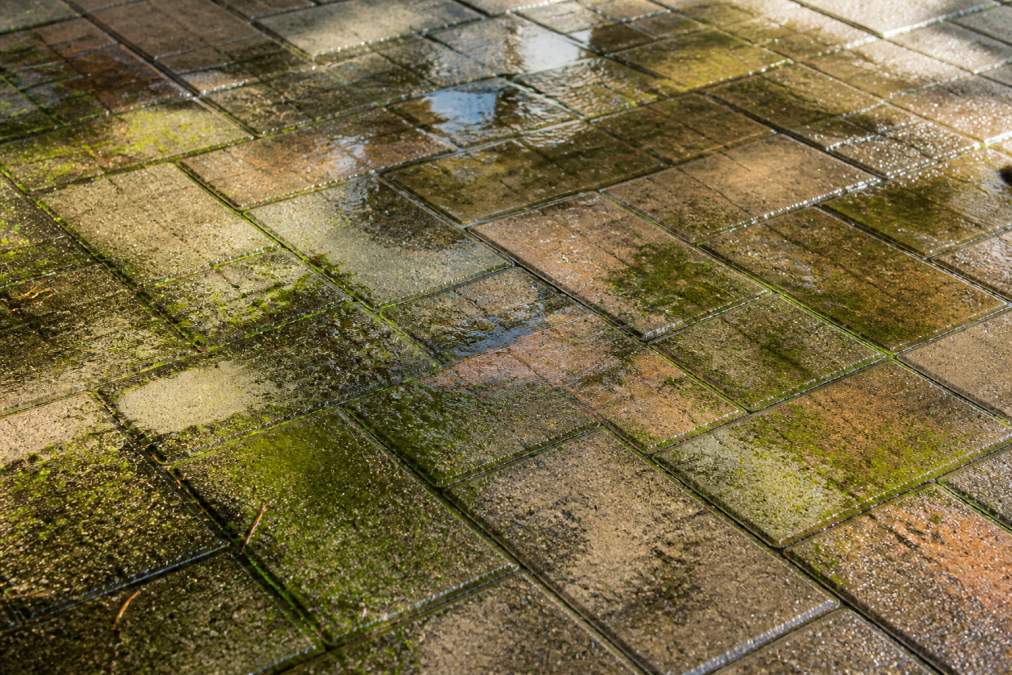
Poor drainage is the foundation of every mold problem. Water pooling on or under pavers creates the moisture mold needs. Fix drainage before you clean.
After rain, check if water pools anywhere or drains toward your house. Ideally, water should flow away from structures.
A patio should slope away from your home at least 1/8 inch per foot to guide water away naturally. Flat or inward-sloping patios collect water and mold.
Here's how to assess and fix grading:
- Walk your patio after rain and note where water sits
- Use a level to check slope direction
- Look for low spots or depressions
- If water pools, you need drainage work
For minor slope issues, add a French drain, a shallow trench filled with gravel and perforated pipe, to capture water before it pools.
For serious drainage problems, consider re-grading or installing a drainage system beneath the pavers. Professional assessment ensures solutions tailored to your patio layout.
Standing water under pavers is often invisible but devastating, keeping the surface wet and feeding mold colonies that spread upward.
Step 2: Remove Organic Debris and Leaves Regularly
Organic debris is mold's food source. Leaves, dirt, and pollen accumulate on pavers and in joints, trapping moisture. Regular removal prevents mold from establishing.
Sweep your patio weekly, especially in fall and spring when leaves and pollen are heaviest.
Focus on the joints between pavers. Debris settles here and stays wet longer. Use a stiff brush or a thin tool to clean out joints. Remove as much as possible.
Use compressed air or a leaf blower to blast debris from joints and surfaces, preventing organic buildup that feeds mold.
Clean gutters and downspouts to prevent debris from dumping onto your patio and to redirect water away.
Here's a simple maintenance routine:
- Sweep weekly or after storms
- Brush joints monthly
- Clear gutters seasonally
- Remove fallen branches immediately
- Rake leaves before they decompose on the pavers
Decomposing organic matter creates a film that traps moisture and feeds mold. Remove it before it hardens.
Weekly removal takes 15 minutes but saves hours of deep cleaning later and keeps mold from establishing.
Step 3: Choose the Best Paver Sealer for Mold Prevention
The best paver sealer for mold prevention creates a hydrophobic barrier so water beads up and rolls off instead of soaking in.
Sealers fill paver pores, making them harder for water to penetrate and keeping surfaces drier between cleanings.
Two main types of sealers exist: penetrating sealers and film-forming sealers.
Penetrating sealers soak into the paver and protect from inside without changing appearance. They last 2-3 years before reapplication.
Film-forming sealers create a visible protective layer with stronger water resistance but can be slippery when wet. They last 3-5 years.
For mold prevention, penetrating sealers are usually better. They reduce moisture absorption without creating slip hazards. The trade-off is more frequent reapplication.
Pavers must be clean and completely dry before sealing. Professional application ensures proper coverage and drying time.
Here's what to look for in a sealer:
- Hydrophobic properties (water-resistant)
- UV stability (won't break down in sunlight)
- Breathability (allows pavers to dry if moisture gets trapped)
- Low slip rating (safe for wet conditions)
- Longevity (3+ years between applications)
Reapply sealer every 2-3 years depending on the product and climate. Regular resealing maintains the hydrophobic barrier and keeps mold from establishing.
Step 4: Establish a Weekly Maintenance and Sweeping Routine
A consistent maintenance routine prevents mold before it starts and is far easier than deep cleaning after mold takes hold.
Sweep every week, even if it doesn't look dirty. Debris accumulates fast. Sweeping removes leaves, pollen, and dirt that trap moisture and feed mold.
Brush joints between pavers once a month. Debris settles deep in joints where moisture lingers. A stiff brush dislodges this material.
Check for standing water after rain. If water pools anywhere, note the location. This tells you where drainage needs improvement.
Rinse the patio monthly with a garden hose to remove dust and pollen without damaging the sealer.
In humid climates, increase frequency to twice-weekly sweeping and bi-weekly joint brushing.
Here's a simple maintenance calendar:
- Daily: inspect for standing water
- Weekly: sweep entire patio
- Monthly: brush joints and rinse with hose
- Quarterly: check sealer condition
- Annually: deep clean and reseal if needed
Adjust your routine to match your climate: fall brings leaves, spring brings pollen and moisture, summer brings rain, and winter traps moisture.
This routine takes 30-45 minutes per month and prevents mold from establishing while saving major cleaning costs later.
How Often Should You Pressure Wash Pavers
Most patios benefit from pressure washing once or twice per year. High-humidity areas may need quarterly cleaning.
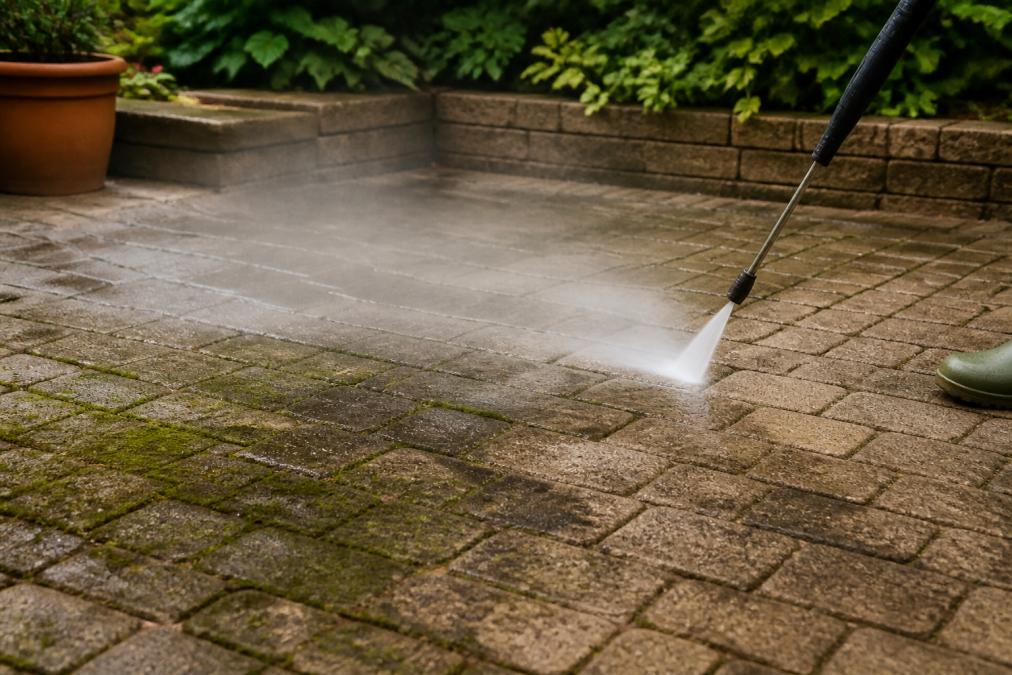
Pressure washing removes algae, moss, and organic buildup that sweeping misses and is necessary for deep cleaning.
High-pressure washing can crack pavers or erode joints.
Here's a pressure washing schedule by climate:
- Dry climates: once per year (spring)
- Moderate humidity: twice per year (spring and fall)
- High humidity: three times per year (spring, summer, fall)
- Heavily shaded areas: add one extra cleaning per year
Preventing Moss Between Pavers and in Joints
Moss grows in the same conditions as mold and thrives in joints, holding moisture against pavers and accelerating mold growth.
Here's how polymeric sand works:
- It's mixed with water during installation
- It hardens and locks in place
- It resists moisture better than regular sand
- It prevents weeds and moss from taking root
- It lasts 5-10 years before degrading
Here's a moss prevention strategy:
- Use polymeric sand in joints
- Sweep debris weekly
- Apply copper sulfate every 2-3 months
- Improve drainage to reduce moisture
- Trim branches to increase sunlight
Preventing Mold Buildup on Patio Pavers: Key Takeaways
To prevent mold patio pavers, you must address moisture, debris, and surface protection. Fix drainage first, sweep weekly, and apply a quality sealer.
| Maintenance Task | Frequency | Time Required | Impact on Mold Prevention |
|---|---|---|---|
| Sweep patio | Weekly | 15 minutes | Removes debris that traps moisture |
| Brush joints | Monthly | 10 minutes | Prevents organic buildup in mold hotspots |
| Rinse with hose | Monthly | 15 minutes | Removes dust and pollen |
| Pressure wash | 1-2 times yearly | 1-2 hours | Deep removal of established mold and algae |
| Reapply sealer | Every 2-3 years | 2-4 hours | Maintains hydrophobic barrier |
| Check drainage | After rain | 5 minutes | Identifies standing water problems |
Frequently Asked Questions
How long does paver sealer last?
Is pressure washing safe for pavers?
Why does mold come back after cleaning?
Frequently Asked Questions
Can I use bleach on my patio pavers to prevent mold?
Yes, bleach solutions can kill mold on pavers, but use it carefully. Mix one part bleach with three parts water, apply with a scrub brush, and rinse thoroughly. Bleach works best on concrete and some stone pavers, but test on a hidden area first, it can discolor certain materials. For a gentler option, copper sulfate or eco-friendly fungicides offer similar results without the harsh chemical smell. Always wear gloves and eye protection when applying bleach.
Why does mold keep coming back on my patio?
Mold returns when moisture, shade, and organic debris persist. Poor drainage creates standing water where mold spores thrive. Overhanging trees block sunlight and drop leaves, feeding mold growth. Polymeric sand in joints can trap moisture if not sealed properly. To stop mold permanently, address drainage first, remove shade when possible, use a hydrophobic sealant, and maintain a weekly sweeping routine. Without fixing the root cause, moisture and organic buildup, cleaning alone won't prevent regrowth.
Does sealing pavers prevent mold growth?
Sealing pavers significantly reduces mold risk by making the surface hydrophobic, so water runs off instead of being absorbed. A quality paver sealant also reduces surface porosity, making it harder for mold spores to establish. However, sealing alone isn't enough, you still need proper drainage, regular debris removal, and sunlight exposure. Combine sealing with preventative maintenance for the best long-term results. Reapply sealant every 1-2 years depending on climate and foot traffic.
How often should you pressure wash pavers to prevent mold?
Pressure wash pavers every 6-12 months, depending on your climate and shade exposure. In humid areas with heavy tree cover, every 6 months is ideal. Use soft washing rather than high-pressure jets to avoid damaging the paver surface and joints. Between professional cleanings, sweep weekly and remove leaves promptly. If mold appears between cleanings, spot-treat with a fungicide or bleach solution rather than waiting for the next scheduled wash. Regular pressure washing removes mold spores before they establish deep in the pores.