 how-to
Does Pressure Washing Kill Driveway Mold? The Truth
Table of Contents
- The Short Answer: What Pressure Washing Actually Does to Driveway Mold
- Why Mold Keeps Coming Back on Concrete Driveways
- The Best Mold Killer for Concrete Driveways (And What to Avoid)
- Pressure Washing vs Soft Washing for Mold: Which Method Wins?
- How to Prevent Mold on Pavers and Concrete Long-Term
- Step-by-Step: How to Remove and Kill Driveway Mold Safely
- When to Call a Professional (and What to Expect)
- Frequently Asked Questions
Last Updated: September 22, 2026
The Short Answer: What Pressure Washing Actually Does to Driveway Mold
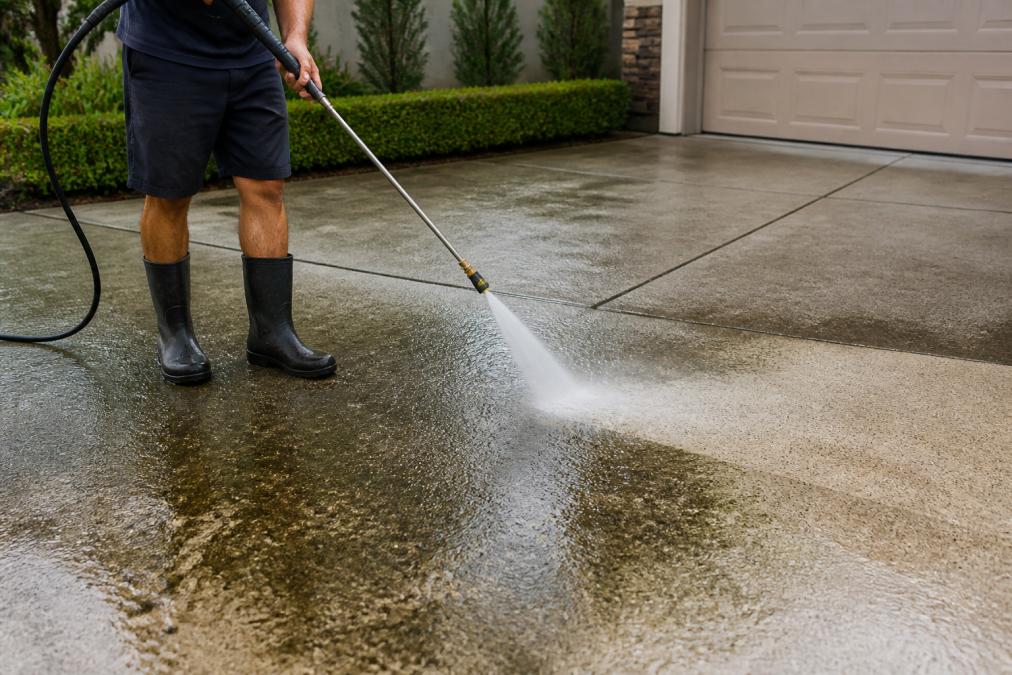
Does pressure washing kill driveway mold? It removes visible mold but not the spores underneath, a distinction most homeowners miss, and the question of does pressure washing kill driveway mold comes down to that gap.
Why Mold Keeps Coming Back on Concrete Driveways
Concrete is porous, and that explains almost every recurring mold problem.
Mold needs three things to thrive:
- Moisture (from rain, sprinklers, or poor drainage)
- Organic buildup (leaves, dirt, pollen, and dust)
- Shade and warmth (areas that stay damp and never dry out)
The Best Mold Killer for Concrete Driveways (And What to Avoid)
The best mold killer depends on what your driveway is made of, not just what is growing on it. A diluted sodium hypochlorite solution (household bleach) or copper sulfate kills spores on bare concrete, but can etch colored pavers, strip sealant, or bleach brick. Match the cleaner to the surface first, then to the severity of the growth.
| Option | Active Ingredient | Dilution | Dwell Time | Kills Spores? | Residual Protection | Safe On |
|---|---|---|---|---|---|---|
| Sodium hypochlorite (bleach) | 6%-8.25% NaOCl | 1 part bleach : 3 parts water | 10-15 min | Yes | None, breaks down in UV | Bare concrete, not pavers |
| Copper sulfate | Copper sulfate pentahydrate | 1-2 oz per gallon | 20-30 min | Yes | Weeks to months | Concrete, some pavers |
| Oxygen bleach (sodium percarbonate) | Sodium percarbonate | 4-8 oz per gallon | 20-30 min | Yes, slower | None | Pavers, colored concrete, wood |
| White vinegar | 5% acetic acid | Full strength | 30-60 min | Partially | None | Light surface mold only |
| Quaternary ammonium | Benzalkonium chloride | Per label | 10 min | Yes | Days to weeks | Most hardscapes |
Bleach Solutions: Effective but Risky
A diluted bleach solution kills mold spores fast. Mix one part bleach with three parts water, apply with a pump sprayer, and let it sit 10 to 15 minutes. Do not let it dry, evaporated bleach stops working and leaves a salt residue that can discolor concrete.
Eco-Friendly Alternatives That Work
You do not need harsh chemicals to kill mold. Gentler options work on light to moderate growth and are better when runoff reaches storm drains, garden beds, or a septic system.
- Oxygen bleach (sodium percarbonate) lifts stains and is safe for most pavers, colored concrete, and even wood. Slower than chlorine bleach but does not kill grass or strip sealant. Mix 4 to 8 ounces per gallon of warm water, warm water activates it faster.
- White vinegar (5% acetic acid) kills surface mold on mild cases. Weak on heavy growth and can etch unsealed limestone or travertine, so test a hidden patch first.
- Copper sulfate controls mold and algae for weeks to months because the copper residue stays on the surface. It can stain light-colored concrete and is toxic to aquatic life, so keep it away from storm drains and ponds.
- Commercial outdoor cleaners with a fungicide (look for benzalkonium chloride or a similar quaternary ammonium compound) handle tougher jobs and leave a short residual that slows regrowth.
Matching the Cleaner to Your Driveway Material
Porosity is the variable most guides skip, and it changes how a cleaner performs.
- Bare concrete is porous but uniform. Bleach, oxygen bleach, and copper sulfate all work; bleach is fastest, oxygen bleach safest for plants.
- Brick pavers are fired clay and can be damaged by acid-based cleaners. Stick to oxygen bleach or a pH-neutral quaternary ammonium product. Never use muriatic acid on brick.
- Natural stone (bluestone, travertine, limestone) is the most sensitive. Acidic cleaners like vinegar etch the surface. Use oxygen bleach or a stone-safe commercial cleaner, and seal afterward.
- Stamped or colored concrete has a surface tint that bleach can fade. Oxygen bleach preserves color better.
- Sealed surfaces should be cleaned with a sealer-compatible product. Harsh bleach can break down acrylic sealers and leave a patchy finish.
Pressure Washing vs Soft Washing for Mold: Which Method Wins?
Soft washing wins for killing mold in most cases: pressure washing removes visible growth, but soft washing kills the spores and treats the cause. The right choice depends on your surface and severity.
When High Pressure Is Safe
High pressure works on bare, solid concrete with no cracks or coatings, stripping years of dirt in one pass.
Avoid high pressure on:
- Paver joints filled with polymeric sand
- Cracked or spalling concrete
- Painted or sealed surfaces
- Wood decks and siding
Why Soft Washing Is Often the Better Choice
Soft washing reaches into the pores where mold hides. The cleaning solution kills spores at the source. That is why the growth stays gone longer.
How to Prevent Mold on Pavers and Concrete Long-Term
Prevention comes down to three things: sealing, drainage, and drying time. Get those right and mold becomes rare instead of a monthly chore. The mistake most homeowners make is treating prevention as a single product purchase, a sealer, a French drain, a trim job, when it is really a system that has to work together.
Sealing and Polymeric Sand: Your Best Defense
A quality sealant blocks water from soaking in, and less moisture means less mold. But not all sealers are equal, the wrong one can trap moisture and make things worse.
Sealer types and what they actually do:
- Film-forming acrylic sealers (matte or glossy) sit on top of the surface and block water, the most common choice for pavers. Matte looks natural; glossy darkens color and can be slippery when wet. Reapply every 2 to 3 years, or when water stops beading.
- Penetrating silane/siloxane sealers soak into the pores and chemically repel water from within. They do not change appearance or peel, and typically last 3 to 5 years on concrete, the better pick for bare concrete driveways where you do not want a sheen.
- Mold-inhibiting additives (often zinc-based or a benzalkonium compound) can be mixed into some sealers. They slow regrowth but do not replace cleaning, a delay, not a cure.
Drainage, Grading, and Shade Management
Standing water is mold's best friend. If water pools on your driveway after rain, fix that first, no cleaner or sealer outruns a drainage problem.
Diagnose the drainage before you treat the mold:
- Check the grading. A driveway should slope away from the garage or house at roughly a 1% to 2% grade, about 1/8 to 1/4 inch of fall per foot. A level or negatively sloped slab holds water.
- Watch where water sits. Puddles lingering more than an hour after rain mark the low spots mold colonizes first.
- Clear debris from drains and gutters. A clogged channel drain or downspout dumping onto the driveway keeps the surface wet long after the storm ends.
- Add a French drain or channel drain if water collects in one spot. A French drain is a gravel-filled trench with a perforated pipe that moves subsurface water away; a channel drain is a surface grate that intercepts sheet flow. For a driveway, a channel drain at the low edge is often simpler.
- Trim trees and shrubs that keep the surface shaded and damp. Shade is harder to fix than drainage but matters, a shaded driveway stays wet for hours longer than a sunny one, and mold needs only about 24 to 48 hours of surface moisture to establish.
Climate and Sun Exposure: The Variable Most Guides Skip
Mold pressure is not the same everywhere, and a plan that works in a dry climate will fail in a humid one.
- Humid, warm climates (Gulf Coast, Southeast, mid-Atlantic summers) see mold return in weeks, not months. Clean twice a year, seal on the shorter end of the interval, and prioritize airflow and drainage.
- Arid and semi-arid climates (Southwest, high plains) see mold mostly in shaded, irrigated zones, under a downspout, near a sprinkler head, along a north-facing wall. Spot-treat those areas and you may never need a full-driveway treatment.
- Cold-winter climates deal with a different problem: freeze-thaw cycles open cracks that hold moisture, and road salt residue feeds organic growth in spring. Seal before the first freeze and clean in early spring.
Step-by-Step: How to Remove and Kill Driveway Mold Safely
Follow these steps to kill driveway mold without damaging the surface.
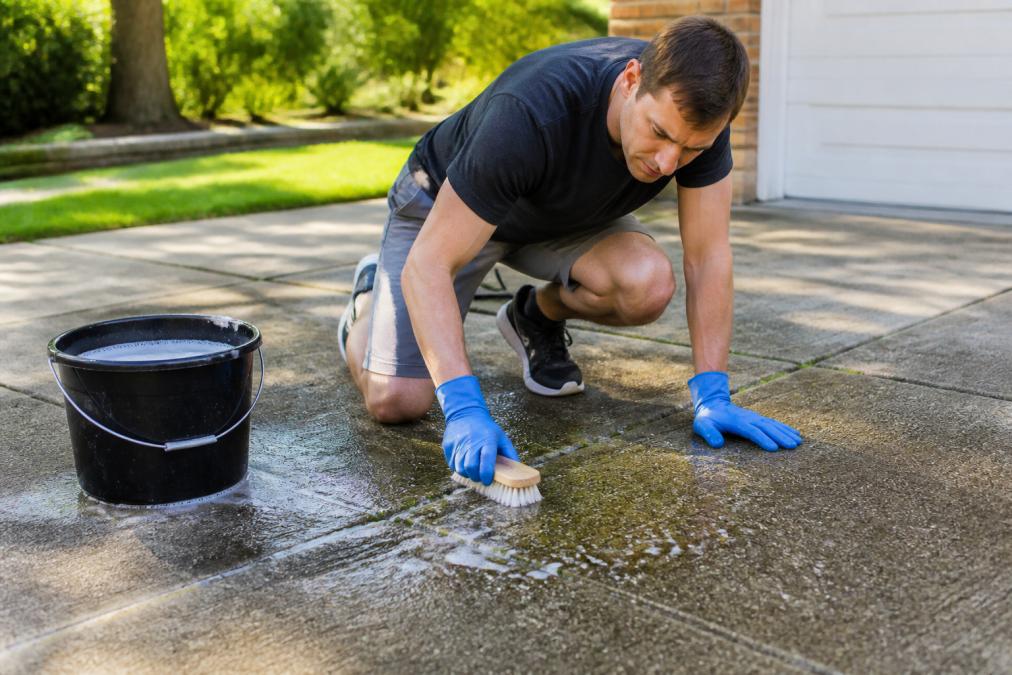
- Clear the surface. Sweep off leaves, dirt, and organic debris.
- Wet the area. Dampen the surface so cleaner spreads evenly.
- Apply your cleaner. Use bleach solution, oxygen bleach, or copper sulfate.
- Let it sit. Give it 10 to 15 minutes to kill the spores.
- Scrub the tough spots. Work a stiff brush into cracks and joints.
- Rinse thoroughly. Wash away dead mold and leftover cleaner.
- Check the drainage. Make sure water flows off, not into, the surface.
- Seal once dry. Apply sealant after the surface dries fully.
When to Call a Professional (and What to Expect)
Call a professional when mold covers large areas, returns quickly, or sits on delicate pavers. DIY works for small spots. Bigger jobs need the right tools and know-how.
Frequently Asked Questions
Does pressure washing kill mold or just remove it?
Pressure washing removes mold and its food source, but it does not always kill the mold spores. To kill mold, you need a cleaning solution like bleach or a commercial fungicide applied before or after washing. Without killing the spores, mold can return in weeks, especially in humid climates. For lasting results, combine pressure washing with a mold-killing treatment and consider sealing the surface.
What is the best mold killer for concrete driveways?
A diluted bleach solution (1 part bleach to 3 parts water) is effective for killing mold on concrete driveways, but it can harm plants and nearby surfaces. For a safer option, use oxygen bleach or a commercial fungicide labeled for concrete. Always test a small area first. After applying, scrub with a brush and rinse thoroughly. For severe cases, a professional soft wash with biodegradable cleaners is the most reliable choice.
Can I use bleach on my patio pavers?
Yes, you can use bleach on patio pavers, but it must be diluted properly and used with caution. Bleach can kill mold and algae, but it may also discolor certain types of pavers or damage polymeric sand joints. Always wet the pavers first, apply a diluted solution, scrub gently, and rinse thoroughly. Avoid letting bleach runoff reach plants or grass. For best results, consider oxygen bleach or a paver-safe cleaner.
How do I prevent mold from returning to my driveway?
Preventing mold requires addressing moisture and organic debris. Regularly sweep leaves and dirt, improve drainage to avoid standing water, and trim back shade-causing vegetation. Apply a paver sealant or concrete sealer to reduce surface porosity and moisture retention. In humid areas, schedule routine cleaning and consider a preventative fungicide treatment. Polymeric sand in paver joints also helps block weed growth and moisture. Consistent maintenance is key.
Mold on a driveway is frustrating because it always seems to return. The fix is not more pressure, it is the right method plus prevention. Steve's Premium Pressure Washing brings over 10 years of experience, soft wash technology, and transparent upfront pricing to every job. We are woman owned and operated, and we tailor each cleaning to your property's needs. Get your estimate from Steve's Premium Pressure Washing and enjoy a driveway that stays clean.