 how-to
How to Safely Clean Vinyl Siding (2026 Guide)
Table of Contents
- What You'll Need to Clean Vinyl Siding
- Step-by-Step: How to Safely Clean Vinyl Siding
- DIY Vinyl Siding Cleaning Solution Recipes
- Best Pressure Washer Settings for Vinyl Siding
- How to Remove Mold from Vinyl Siding Safely
- Common Mistakes and Troubleshooting Stains
- When to Hire a Professional
- Frequently Asked Questions
Last Updated: September 5, 2026
What You'll Need to Clean Vinyl Siding
Cleaning vinyl siding safely starts with gathering the right tools, because using the wrong equipment is the fastest way to turn a simple chore into costly damage. Vinyl siding is durable, but it is not indestructible; high-pressure water or abrasive pads can crack panels, force moisture behind the siding, and leave permanent streaks. At Steve's Premium Pressure Washing, we have spent over a decade cleaning exterior surfaces, and the most common repair calls we see trace back to a well-intentioned DIY job with the wrong gear.
Your basic kit should include a soft-bristled brush or sponge, an extension pole to reach upper stories, a bucket, and a standard garden hose. You will also need safety goggles and non-slip footwear, especially if you are working from a ladder. Many homeowners already own most of these items, which is one reason DIY cleaning remains popular for routine maintenance on single-story homes.
| Tool | Purpose | Why It Matters |
|---|---|---|
| Soft-bristled brush | Scrubbing surface grime | Stiff bristles scratch siding panels |
| Garden hose | Rinsing and low-pressure washing | Safe on all siding types |
| Extension pole | Reaching second-story areas | Reduces ladder-related falls |
| Safety goggles | Eye protection | Cleaning solutions can splash |
| Bucket | Mixing cleaning solution | Controls water-to-solution ratio |
Step-by-Step: How to Safely Clean Vinyl Siding
The safest method to clean vinyl siding involves three phases: preparation, application, and rinsing. Skipping the prep work is the single biggest mistake homeowners make, and it usually leads to damaged landscaping or chemical runoff you will have to answer for later.
Step 1: Prepare the Area and Protect Landscaping
Start by covering shrubs, flower beds, and outdoor outlets with plastic sheeting or drop cloths. Move furniture, grills, and decorations away from the work zone. Check for cracks or gaps in the siding and seal them with exterior caulk before washing, because forcing water into these openings can lead to mold growth inside the wall cavity.
Step 2: Apply Your Cleaning Solution
Work from the bottom up when applying any cleaning solution. This prevents dirty water from streaking down dry panels and leaving residue you will have to scrub twice. Use a pump sprayer or a soft cloth to apply the solution evenly, and let it sit for five to ten minutes so it can break down grime and oxidation.
Step 3: Scrub and Rinse
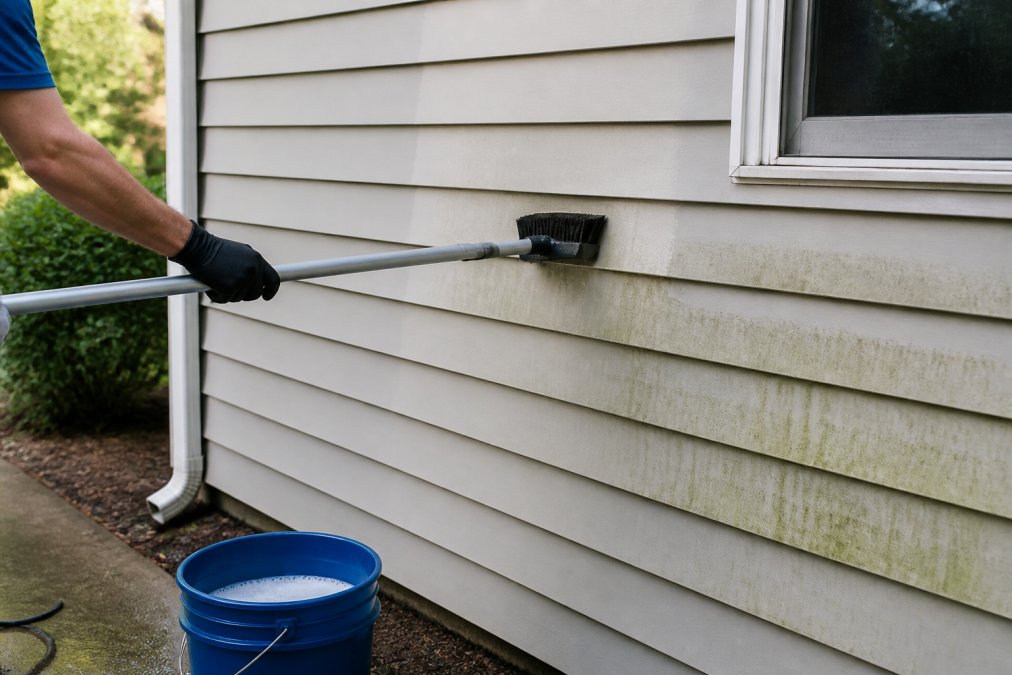
Scrub gently with your soft-bristled brush, focusing on areas with visible buildup like under eaves and near gutters. Rinse thoroughly with a garden hose, working from the top down to wash away loosened dirt. If you notice streaking after rinsing, the solution was left on too long or the water-to-solution ratio was off.
DIY Vinyl Siding Cleaning Solution Recipes
Choosing the right cleaning solution is about more than just removing dirt; it's about protecting your landscaping and the local environment. Most standard guides recommend harsh chemicals without considering where the runoff goes. After rinsing, the solution flows directly into your garden beds, lawn, and eventually storm drains. This runoff can harm your plants and soil health. Here are effective recipes that prioritize both cleaning power and ecological safety.
The Standard Gentle Cleaner
For routine dust and pollen, a simple solution of 1/3 cup of mild, phosphate-free liquid dish soap (like Dawn or Seventh Generation) mixed with one gallon of warm water is highly effective. This is your safest bet for general cleaning. The soap breaks down the light film of grime without being so aggressive that it strips the siding's protective coating or damages nearby vegetation.
The Eco-Friendly Mildew & Algae Fighter
For mold, mildew, and algae, the most common recommendation is chlorine bleach. However, chlorine bleach is highly toxic to plants and soil microorganisms. A safer, equally effective alternative is a solution of oxygen bleach (sodium percarbonate, found in products like OxiClean) and water. Mix one part oxygen bleach with four parts water (the EPA). Unlike chlorine, oxygen bleach breaks down into oxygen, water, and natural soda ash, making it safe for your garden and lawn. It is also highly effective at killing mold spores at the root.
Best Pressure Washer Settings for Vinyl Siding
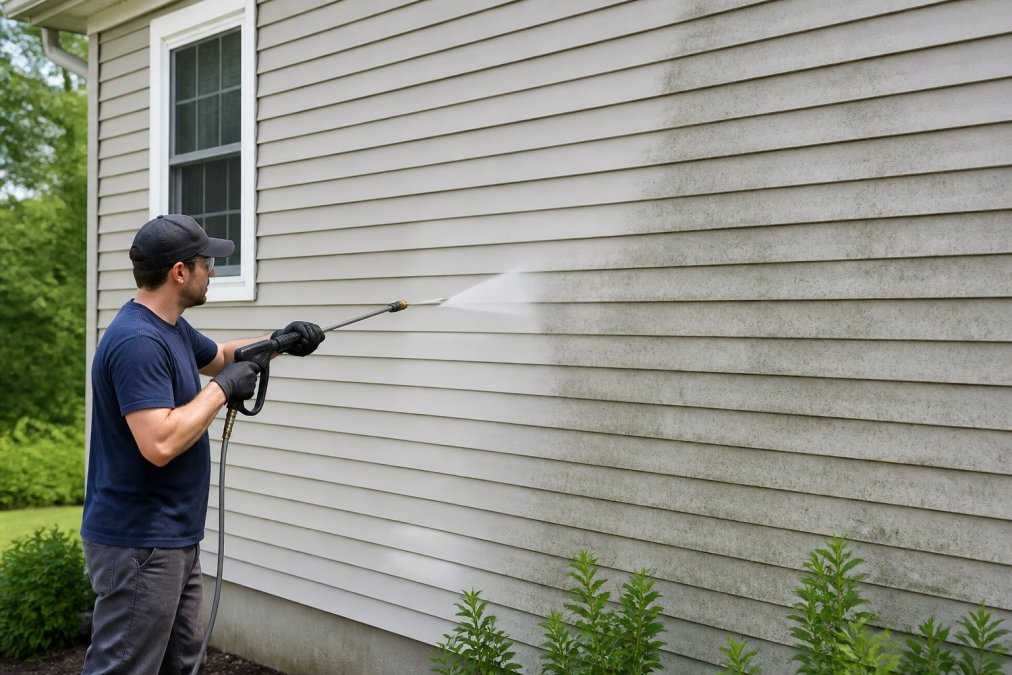
If you choose to use a pressure washer instead of a garden hose, the best pressure washer settings for vinyl siding are lower than most people expect. Set your machine to 1,200 to 1,500 PSI maximum, and use a 25- or 40-degree nozzle tip to spread the spray over a wider area. A narrow nozzle at high pressure can cut through siding like a knife.
Hold the wand at a downward angle and keep the tip at least 12 to 18 inches away from the surface. Move in long, sweeping motions rather than stopping in one spot, which can force water behind the panels. The American Cleaning Institute's guidance on exterior surfaces recommends starting at the lowest effective pressure and increasing only if needed.
How to Remove Mold from Vinyl Siding Safely
Mold and mildew on vinyl siding is more than an eyesore; it can spread to other parts of your home's exterior if left untreated. To remove mold from vinyl siding safely, treat the affected area with a bleach-free cleaning solution and scrub gently with a soft brush. Oxygen bleach is particularly effective because it kills mold spores at the root without damaging the siding or surrounding vegetation.
After scrubbing, rinse thoroughly and allow the area to dry completely. Mold thrives in damp, shaded spots, so improving airflow around the affected area can prevent it from returning. If you are dealing with a large infestation or mold that has penetrated behind the siding, professional treatment is the safer route, as improper removal can release spores into the air.
Common Mistakes and Troubleshooting Stains
Most siding damage comes from a handful of predictable mistakes. Using a pressure washer at full power is the leading cause of cracked panels and water intrusion. Scrubbing with abrasive pads or wire brushes scratches the surface, leaving permanent marks that actually trap dirt faster. And many homeowners forget to rinse thoroughly, which leaves detergent residue that attracts new grime within weeks.
For specific stains, the fix depends on the culprit:
- Rust stains from metal fixtures: use a dedicated rust remover, then rinse immediately
- Grease or oil marks near driveways: apply a degreaser and let it sit before scrubbing
- Chalky white residue: this is oxidation, which requires a stronger cleaning solution and more elbow grease
- Hard water spots: white vinegar cut with water dissolves mineral deposits
If you have tried these methods and stains persist, the issue may be deeper than surface dirt. Siding that has been neglected for years often needs professional soft washing, which uses low pressure and specialized solutions to clean without damage.
When to Hire a Professional
Knowing when to call a professional is just as important as knowing how to clean vinyl siding yourself. If your home has two or more stories, significant mold growth, or stains that will not budge after a DIY attempt, the risk of injury or property damage outweighs the cost savings. Ladder accidents are a leading cause of home improvement injuries, and working at height with wet equipment compounds that risk (the CDC).
Professional exterior cleaning services use soft wash technology that cleans effectively at low pressure, protecting your siding while still removing years of buildup. At Steve's Premium Pressure Washing, our team brings over a decade of experience and uses techniques refined through hundreds of residential and commercial projects. We also handle the safety considerations, from ladder placement to chemical handling, so you do not have to.
Cleaning your vinyl siding is a manageable weekend project for most single-story homes, but the margin for error grows with every story you add. A thorough understanding of the process, the right tools, and realistic expectations about your own skill level will keep your home looking sharp without costly repairs. When the job calls for more than a garden hose and a Saturday afternoon, a professional touch protects both your investment and your peace of mind.
Frequently Asked Questions
What is the safest cleaner for vinyl siding?
A DIY vinyl siding cleaning solution of warm water mixed with a gentle dish soap, like Dawn, is a safe option for routine cleaning. For tougher grime or mold, a mixture of water and white vinegar (a 70/30 ratio) can be effective without harsh chemicals. Avoid bleach-heavy solutions unless mold is severe, and always test any cleaner on an inconspicuous spot first to check for streaking or discoloration.
Can you use a pressure washer on vinyl siding?
Yes, you can, but only with the right technique to avoid damage. The best pressure washer settings for vinyl siding are a wide fan tip (at least 25 degrees) and a PSI setting below 1500. Hold the nozzle at least 12-18 inches away from the wall, keep the wand moving, and never angle the spray upward, as this can force water behind the siding panels and lead to mold growth.
How often should you clean vinyl siding to prevent damage?
Most homes benefit from cleaning vinyl siding once a year to prevent dirt, mold spores, and algae from building up. If you live in a humid climate or near trees, you may need to clean it every six months. Regular cleaning prevents the need for harsh scrubbing later and preserves your home's curb appeal. Consistent rinsing also stops grime from becoming embedded in the surface texture.
What should you not clean vinyl siding with?
Avoid using undiluted bleach, abrasive scouring pads, or metal brushes, as these can permanently scratch or discolor the siding. Never use a pressure washer with a narrow nozzle or high PSI settings above 1500, as this can crack panels and force water into the walls. Also, avoid cleaning in direct, hot sunlight, which causes cleaning solutions to dry too fast and leave streaks.
Curb appeal matters, but so does doing the job without damaging your home. Whether you need a full exterior cleaning or just want to tackle stubborn mold before it spreads, the right approach makes all the difference. Get a free estimate from Steve's Premium Pressure Washing today, and let our experienced team handle the heavy lifting with transparent pricing and spotless results.